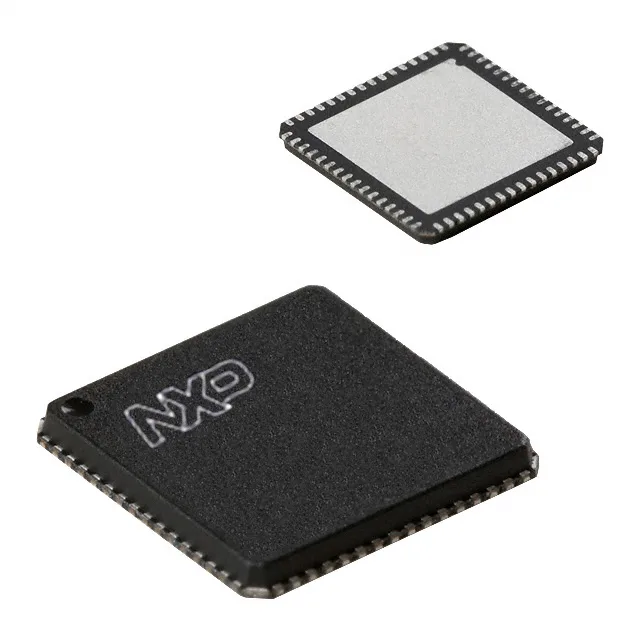
NXP LPC2138FHN64/01,55 ARM7 MCU, 60MHz, 512KB Flash, Obsolete
NXP LPC2138FHN64/01,55, LPC2100 series, ARM7 16/32-bit MCU, 60MHz, 512KB Flash, 32KB RAM, 47 I/O, 3V–3.6V, 64-HVQFN (9x9), -40°C to 85°C, tray.
Specifications
| Parameter | Value |
|---|---|
| Series | LPC2100 |
| Mounting | Surface Mount |
| Oscillator type | Internal |
| Program memory type | FLASH |
| Voltage - supply (Vcc (Vdd)) | 3V ~ 3.6V |
| Operating temperature | -40°C ~ 85°C (TA) |
| Speed | 60MHz |
| Package | Tray |
| RAM size | 32K x 8 |
| Core size | 16/32-Bit |
| Peripherals | Brown-out Detect/Reset, POR, PWM, WDT |
| Connectivity | I²C, Microwire, SPI, SSI, SSP, UART/USART |
| Number of i (O) | 47 |
| Core processor | ARM7® |
| Case | 64-VFQFN Exposed Pad |
| Data converters | A/D 16x10b; D/A 1x10b |
| Program memory size | 512KB (512K x 8) |
Frequently asked questions
Can I use the 47 I/O and dual SSP ports for a Profinet/RT Ethernet stack?
The LPC2138 does not carry an integrated EMAC (Ethernet MAC) — a Profinet/RT stack requires external PHY hardware and consumes significant CPU cycles on the SSP/SPI ports. The LPC2378, which includes a built-in EMAC, is better suited to Ethernet-connected designs. If your architecture uses a external PHY, confirm the SSP bus bandwidth and CPU headroom against your protocol stack load before committing the LPC2138 to that role.
How do I source this part for a Q4 panel build?
Submit an RFQ with your required quantity, target date, and traceability requirement. All stock is channel-exit; availability and pricing are quote-driven, not catalog-listed. Do not plan against a shelf-availability assumption.