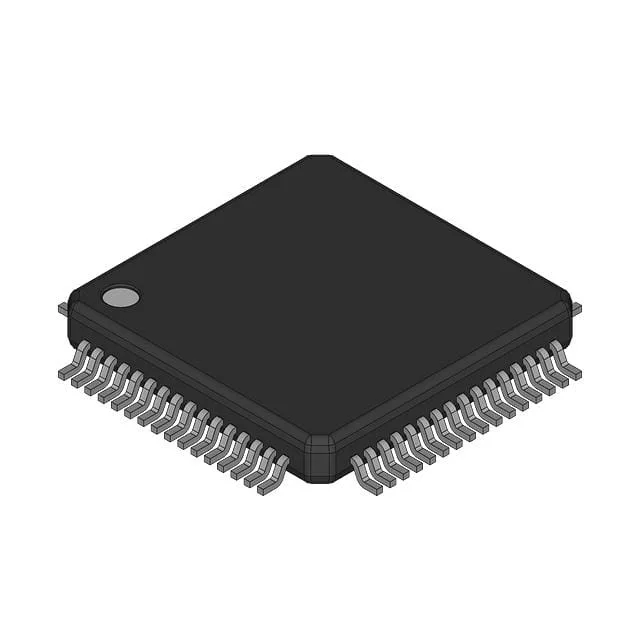
72 MHz Cortex-M3 with integrated EEPROM
NXP LPC1549JBD64 is a 32-bit ARM Cortex-M3 single-core MCU running at 72 MHz, with 256 KB Flash, 36 KB SRAM, and an integrated 4 KB EEPROM block. The 24-channel 12-bit ADC covers sensor multiplexing in industrial control and motor-feedback applications without external analog muxes. Connectivity includes CANbus, USB, I²C, SPI, and multiple UART/USART channels. Dual CANbus controllers let the part bridge two CAN segments — useful for gateway designs between a vehicle body bus and a powertrain bus, or between a factory line bus and a machine-control bus.
Memory sizing and firmware fit
256 KB Flash and 36 KB SRAM place this MCU in the mid-capacity tier of the LPC15xx family. The 4 KB EEPROM is a genuine differentiator — if your design stores calibration tables or node-address parameters that must survive a firmware update, the LPC1549JBD64 saves the external EEPROM and its associated PCB area.
64-LQFP (10x10 mm) surface-mount package with 44 available GPIOs. The pitch requires standard SMT assembly; no fine-pitch or BGA rework challenges. 44 I/Os cover a typical industrial control application: 8 inputs for limit switches, 8 outputs for relay drivers, CAN and USB transceiver connections, plus SPI and I²C for an external sensor bus.