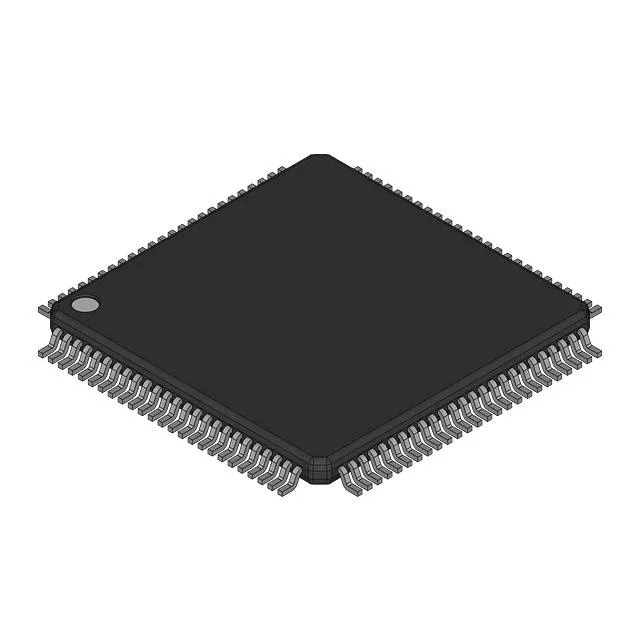
ARM Cortex-M3 at 72 MHz with on-chip Flash, RAM, and EEPROM
The NXP LPC1549JBD100551 is a 32-bit ARM Cortex-M3 MCU from the LPC15xx series, clocked at 72 MHz with 256 KB Flash program memory, 36 KB RAM, and 4 KB EEPROM. The three-tier memory architecture lets the firmware image, runtime data buffers, and calibration constants each live in their own storage domain — no external EEPROM needed for parameter retention.
What the memory partition means for the BOM
The 256 KB Flash holds a moderate firmware stack — enough for a CANopen or Modbus RTU stack plus application logic. The 36 KB RAM supports two or three moderate-size data buffers without pushing into external SRAM. The 4 KB EEPROM is useful for calibration coefficients, production serial numbers, or fault logs that must survive a power cycle. Budget the ECC if you cycle the Flash near its documented endurance — the on-chip Flash controller handles it, but the firmware must not treat the EEPROM emulation as unlimited-write RAM.
Peripheral set for industrial communication
CANbus, USB, I²C, SPI, and UART/USART are all on-chip. The 24-channel 12-bit ADC captures analog sensor inputs without an external multiplexer.