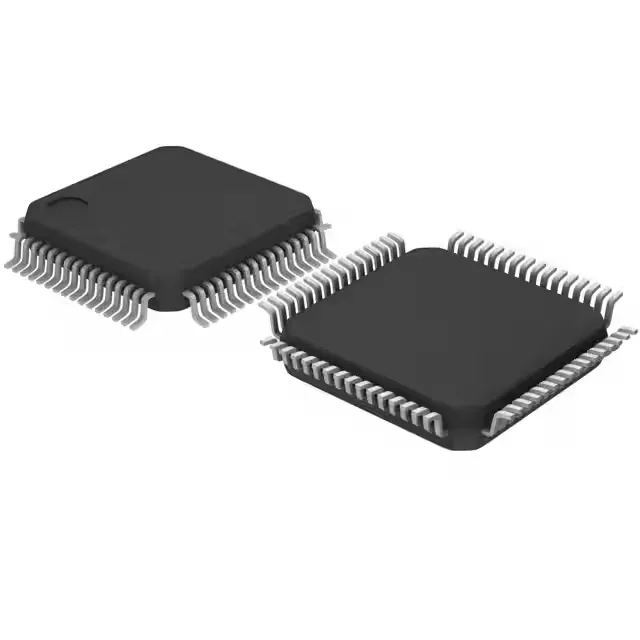
NXP LPC15xx series ARM Cortex-M3 MCU, 72MHz, 256KB Flash, 36KB RAM, 4KB EEPROM, 24x12b ADC, CANbus/I2C/SPI/USART, 46 I/O, 2.4–3.6V, -40°C to 105°C, 64-LQFP.
- 100% new & originalTraceable channels only — no refurbs, no pulls, no remarked parts.
- Date & lot codes on quoteStated per line before you commit; label photos on request.
- MSL-compliant ESD packingMoisture-sealed bags with indicator cards; reels photo-verified.
- PayPal buyer protectionPay by T/T, PayPal or Payoneer — card payments covered end to end.
Specifications
| Parameter | Value |
|---|---|
| Series | LPC15xx |
| Mounting type | Surface Mount |
| Oscillator type | Internal |
| Program memory type | FLASH |
| Voltage - supply (Vcc (Vdd)) | 2.4V ~ 3.6V |
| Operating temperature | -40°C~105°C(TA) |
| Speed | 72MHz |
| Package | Tray |
| RAM size | 36K x 8 |
| Core size | 32-Bit Single-Core |
| EEPROM size | 4K x 8 |
| Peripherals | Brown-out Detect/Reset, DMA, POR, PWM, WDT |
| Connectivity | CANbus, I²C, SPI, UART/USART |
| Number of i (O) | 46 |
| Core processor | ARM® Cortex®-M3 |
| Case | 64-LQFP |
| Data converters | A/D 24x12b |
| Program memory size | 256KB (256K x 8) |
Frequently asked questions
Does the brown-out detector on this part require firmware to enable?
No. The brown-out Detect/Reset is a hardware peripheral — it is always active and cannot be disabled by firmware. If the design needs to survive brief supply dips without resetting, the mitigation must be in the upstream power architecture, not in firmware configuration.
Does the LPC1519JBD64E require an external crystal to run at 72MHz?
No — the oscillator type is Internal, so the 72MHz core clock is generated on-chip. External crystal is not required for the CPU clock. If your CAN timing loop requires tighter accuracy than the internal RC oscillator provides, or if you are targeting USB, verify the internal oscillator PLL specifications against your baud-rate accuracy requirements in the NXP user manual.
What supply voltage does the LPC1519JBD64E need, and what is the minimum?
The part operates from a single rail of 2.4V to 3.6V. The 2.4V minimum is the key constraint for supply planning — designs running a nominal 3.3V rail with marginal LDO headroom or long cable drops can dip below this threshold under load, triggering brown-out reset.