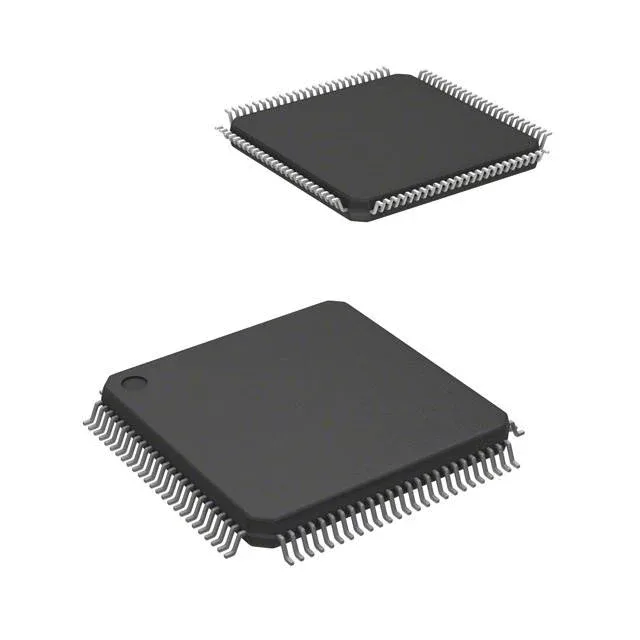
72 MHz Cortex-M3 — what the clock means for the bus
The LPC1519JBD100E runs a 32-bit ARM Cortex-M3 core at 72 MHz, which puts it in the mid-range performance band for control-loop and communication-gateway tasks. At this clock, single-cycle multiply and 12-cycle divide keep interrupt latency predictable for PWM updates and CAN message handling. The 256 KB Flash and 36 KB SRAM are sized for a firmware stack that includes a real-time OS, a CANopen or Modbus protocol layer, and a moderate data buffer — think motor-drive parameter tables or sensor fusion arrays.
Memory map — Flash, SRAM, and the 4 KB EEPROM block
Three memory tiers on one die: 256 KB Flash for program and constant data, 36 KB SRAM for stack and heap, and a separate 4 KB EEPROM block for calibration constants or fail-safe parameters that survive a brown-out. Compared to a sibling in the same LPC15xx family that omits the EEPROM slice, this part is the one to pick when field-updatable trim values or production-line serial numbers must be stored without wear-leveling tricks in Flash.