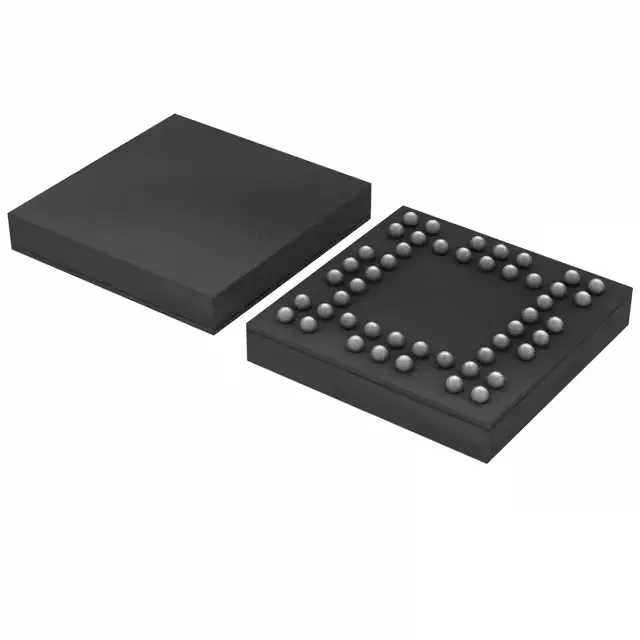
NXP USA Inc. LPC1115FET48/CP3336,151 — Microcontrollers & Processors (MCU / MPU / DSP)

NXP LPC1115FET48/CP3336,151 ARM Cortex-M0 MCU, 50 MHz, 64 KB Flash

MPNLPC1115FET48/CP3336,151
Active

NXP LPC1100XL series ARM Cortex-M0 MCU, LPC1115FET48/CP3336,151, 32-bit single-core at 50 MHz, 64 KB Flash, 8 KB SRAM, 42 GPIO, I²C/SPI/UART, 8-channel 10-bit ADC, 48-TFBGA (4.5x4.5 mm), -40 to 85°C.

Independent supplier — new & surplus stockAuthenticity-screened · ESD-safe packingListing updated Jul 2026

Specifications

LPC1115FET48/CP3336,151 specifications
ParameterValue
SeriesLPC1100XL
MountingSurface Mount
Oscillator typeInternal
Program memory typeFLASH
Voltage - supply (Vcc (Vdd))1.8V ~ 3.6V
Operating temperature-40°C~85°C(TA)
Speed50MHz
PackageBulk
RAM size8K x 8
Core size32-Bit Single-Core
PeripheralsBrown-out Detect/Reset, POR, WDT
ConnectivityI²C, SPI, UART/USART
Number of i (O)42
Core processorARM® Cortex®-M0
Case48-TFBGA
Data convertersA/D 8x10b
Program memory size64KB (64K x 8)

Product details

At 50 MHz the Cortex-M0 executes most single-cycle instructions, so a tight PID loop or a bit-banged SPI bus can run without a timer interrupt on every byte. The 8 KB SRAM limits the buffer depth for high-data-rate streams — plan for DMA or double-buffering if you are logging ADC samples at the full 10-bit resolution.

The LPC1115FET48 carries an Active lifecycle status. The base product number LPC1115 covers the whole density family.

Frequently asked questions

What are the exact specifications of LPC1115FET48?

It is a 32-bit ARM Cortex-M0 MCU at 50 MHz with 64 KB Flash, 8 KB SRAM, 42 GPIO, I²C/SPI/UART interfaces, an 8-channel 10-bit ADC, and a 48-TFBGA package rated for -40°C to 85°C.

Is LPC1115FET48/CP3336,151 the same as standard LPC1115FET48?

The /CP3336,151 suffix is a NXP-specific ordering code variant; the base silicon and specifications are identical to the standard LPC1115FET48.

Can LPC1115FET48 be programmed with standard ARM Cortex-M0 tools?

Yes, it uses the standard ARM Cortex-M0 debug interface (SWD) and is supported by Keil MDK, IAR EWARM, and the GNU ARM Embedded toolchain.