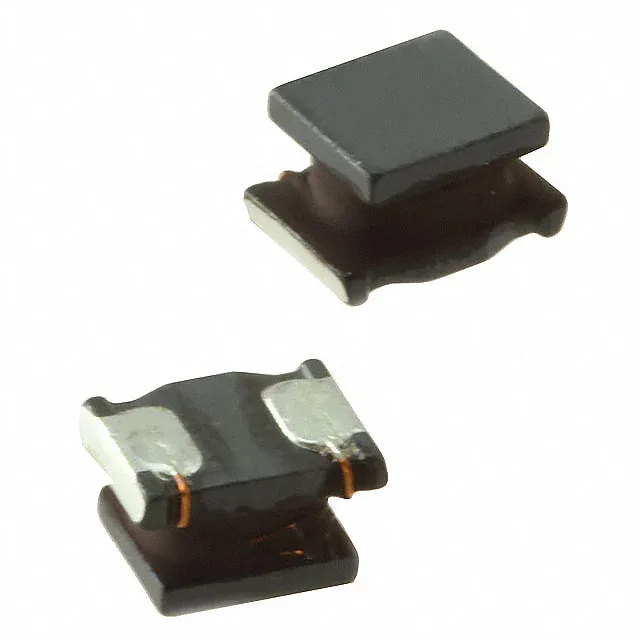
The Murata LQH43PH2R2M26L is a 2.2 µH shielded wirewound inductor from the LQH43 series, rated for 2.5 A continuous with a saturation current of 2.3 A and a max DCR of 50.4 mOhm. It carries AEC-Q200 automotive qualification, meaning it has passed the stress tests for under-hood and chassis-level temperature cycling, mechanical shock, and bias humidity — not just a commercial-grade part.
Saturation headroom and DC bias fit
The 2.3 A saturation current (Isat) sits just 0.2 A below the 2.5 A rated current — a tight headroom. In a buck converter feeding a 2 A load, the inductor sees the full DC plus ripple peak; if the ripple current crests above 2.3 A, the inductance drops sharply and the output ripple climbs. Budget the peak inductor current below 2.0 A to stay clear of the knee. Max DCR of 50.4 mOhm translates to roughly 315 mW I²R loss at 2.5 A — the ferrite core material adds core loss that scales with switching frequency. The 45 MHz self-resonant frequency is well above the 400 kHz – 2 MHz band of most automotive DC-DC converters, so the inductor behaves as a pure inductive element in-band — no SRF roll-off to account for in the loop compensation.
Package and board integration
The shielded construction contains the magnetic flux within the ferrite drum, so adjacent traces carrying analog signals or sensor inputs won't pick up switching noise from the inductor's stray field. The ±20% tolerance is typical for power inductors — the DC bias curve in the datasheet is the real inductance at load, not the open-circuit value.