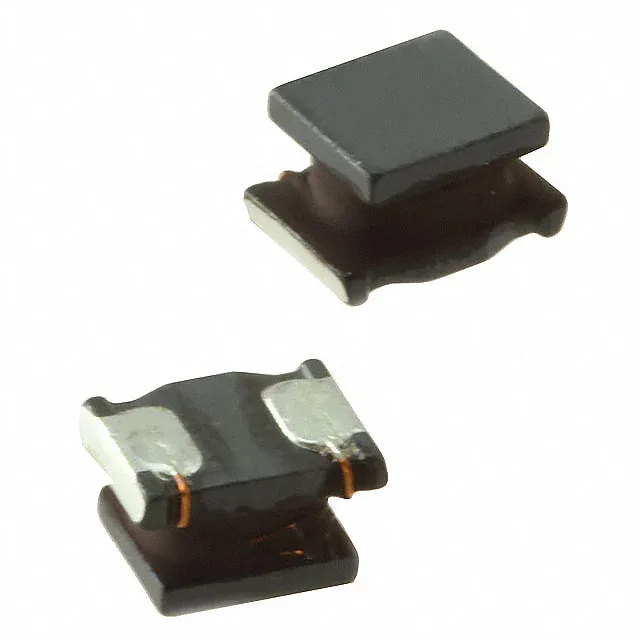
Active 220 µH shielded inductor in 1812
The Murata LQH43PB221M26L is an active-production drum-core wirewound inductor in the LQH43 series, rated 220 µH ±20% with a shielded ferrite core. Rated current is 130 mA continuous, with a saturation current of 220 mA — the inductor maintains its inductance value up to the saturation point, beyond which it behaves as a short circuit.
Parametric limits for filter and DC-DC design
Maximum DC resistance is 3.48 Ohm, which sets the I²R copper loss at rated current — at 130 mA the dissipation is roughly 59 mW, negligible in most surface-mount applications. Self-resonant frequency is 2 MHz; above this frequency the parasitic capacitance dominates and the component no longer behaves as an inductor — keep switching or filtering frequencies well below this point. Operating temperature range spans -40°C to 125°C, covering automotive under-hood and industrial ambient conditions without derating for the rated current.
1812 footprint and shielded construction
Shielded ferrite core construction reduces magnetic flux leakage into adjacent traces or components — important when routing near sensitive analog or RF signal paths on the same layer.