Active production and sourcing posture
The LQH43CN3R9M33L: For volume purchases, pricing and lead time are confirmed at the time of an RFQ against the specific BOM quantity.
What the 3.9 µH and 1.6 A ratings mean for your power rail
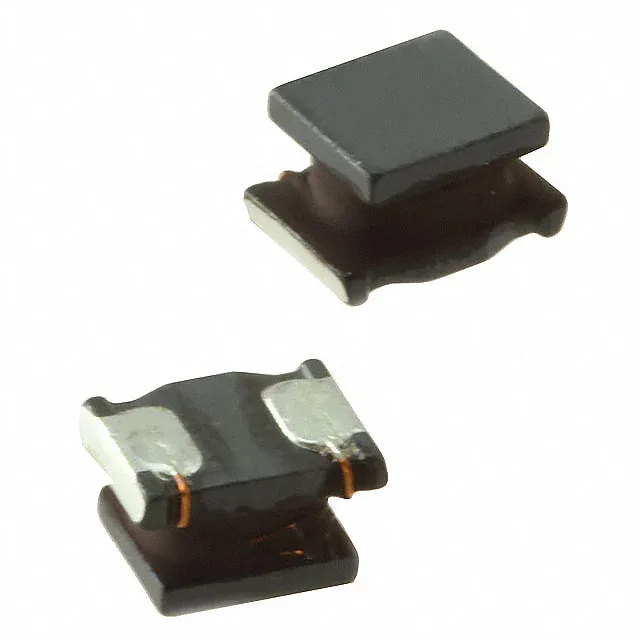
This is a 3.9 µH drum-core wirewound inductor in the LQH43 series, unshielded. The 1.6 A current rating is the DC current at which the inductance typically drops by 10% due to core saturation — not the thermal limit. The self-resonant frequency of 40 MHz is the point where the inductor's parasitic capacitance cancels its inductance. For a buck converter switching at 500 kHz, this is well above the fundamental, so the inductor behaves as a pure inductance at the switching frequency. The unshielded construction means the flux field extends outside the body — keep sensitive traces or ferrite materials at least 5 mm away to avoid coupling.
Board-fit and footprint check
The ferrite core material and wirewound construction give it a higher Q and current handling than a multilayer ferrite bead of the same size, but the unshielded nature means it radiates a magnetic field — not ideal for tight layouts near RF or precision analog stages without a ground plane underneath.