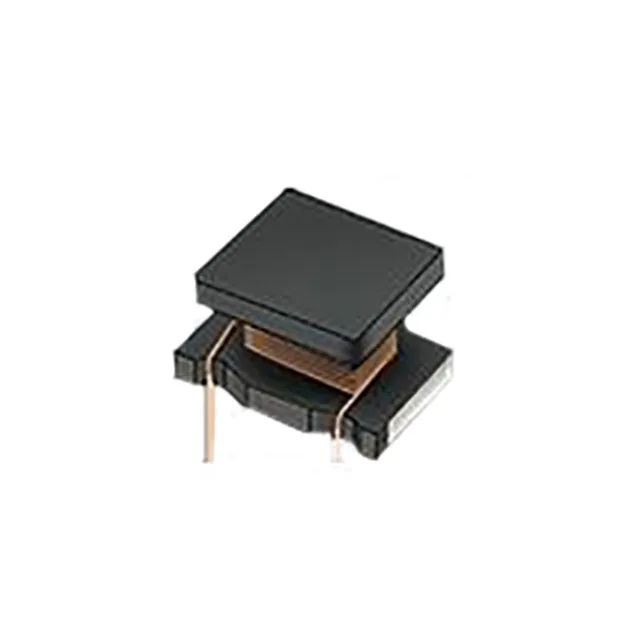
Active production, AEC-Q200 qualified
The LQH32NZ2R7K23L: AEC-Q200 qualification means this inductor has passed the full stress-test suite for passive components in automotive electronics — thermal shock, vibration, humidity bias, and solder heat resistance.
2.7 µH, 320 mA, 900 mΩ DCR — what the ratings mean for your power rail
Inductance is 2.7 µH at 1 MHz test frequency. The 320 mA DC current rating is the saturation or self-heating limit — for a 3.3 V to 1.8 V buck converter switching at 2 MHz, this inductor supports output loads up to roughly 250 mA before the core saturates or the temperature rise exceeds 40°C. Maximum DC resistance is 900 mΩ. At 320 mA, I²R loss is 92 mW — negligible for a 1210 footprint, but the copper loss does add to the core loss at frequency. The unshielded construction means flux radiates into the surrounding PCB; keep sensitive analog traces or RF loops at least 5 mm away from the body. Self-resonant frequency is 43 MHz, well above the 1–10 MHz switching range of most automotive DC-DC converters — the inductor behaves as a pure inductor up to that band. Q factor is 20 at 1 MHz, typical for a ferrite-core wirewound in this size class.
1210 footprint, surface-mount assembly
The ferrite drum-core and wirewound construction gives lower DCR per inductance than a multilayer ferrite chip, but the unshielded flux path demands attention in layout. Supplied on tape and reel, cut tape available. The base product number is LQH32NZ — the suffix K23L encodes the ±10% tolerance and the 2.7 µH value. RoHS and REACH declarations are standard with Murata; the AEC-Q200 test report is available on request from the manufacturer.