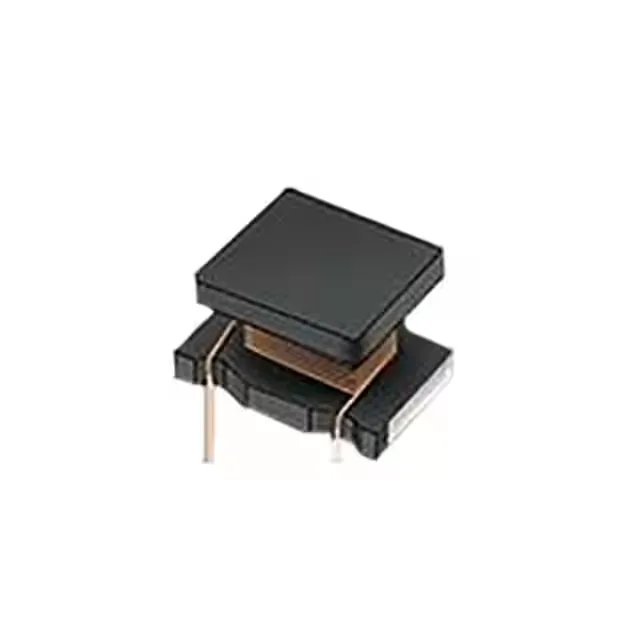
AEC-Q200 qualification anchors the reliability profile
The LQH32NZ270J23L: Rated AEC-Q200, this inductor meets the passive-component stress-test qualification for automotive electronics — the same test suite covers thermal shock, vibration, moisture resistance, and solder heat tolerance that a component sees in an under-hood or chassis-mounted ECU.
27 µH, 125 mA, 3.1 Ohm — the three numbers that decide fit
Inductance is 27 µH at 1 MHz test frequency, ±5% tolerance — the tight band suits LC filter designs where the corner frequency must stay within a few percent of the target. Rated DC current is 125 mA; the maximum DC resistance is 3.1 Ohm. In a buck-converter output filter, the I²R loss at full rated current is about 48 mW — negligible for the 1210 footprint, but the DCR also sets the low-frequency impedance divider with the load. Self-resonant frequency is 13 MHz, and Q factor is 35 at 1 MHz. Above SRF the inductor behaves capacitively, so the useful filtering band stops well below 13 MHz — a consideration for any switching regulator switching above 2–3 MHz.
Drum core, wirewound, unshielded — construction trade-offs
Drum-core wirewound construction with a ferrite core and no magnetic shield means the flux field extends beyond the component body. Adjacent traces carrying high-di/dt signals should be kept at least one component width away to avoid parasitic coupling. The unshielded body has no top-side metal, so pick-and-place nozzle clearance is straightforward.
Temperature grade covers automotive and industrial ambient
Operating range is -40°C to +105°C — the full automotive Grade 3 temperature band and the common industrial ambient envelope. No derating is required at 85°C ambient, but above 105°C the part is outside its rated operating range.