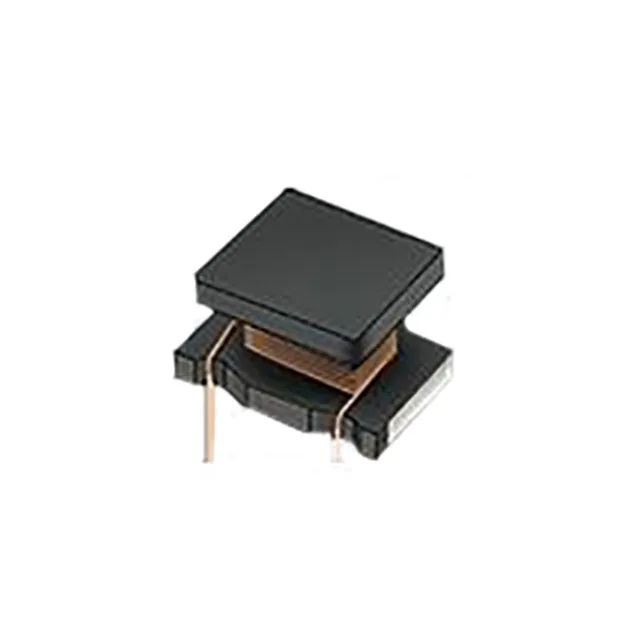
10 µH at 190 mA — what the ratings mean
The LQH32NZ100J23L: The 10 µH inductance at 1 MHz test frequency is the nominal value at the rated current. The 190 mA current rating is the DC current at which the inductance typically drops by 10 % — beyond that the core starts to saturate and the effective inductance falls off. With a max DC resistance of 1.8 Ohm, the I²R loss at full rated current is about 65 mW. That is low enough for most signal-line and low-power rail filtering but matters if the trace carries continuous near-rated current in a confined 1210 footprint.
Automotive-grade qualification
AEC-Q200 rated — this inductor meets the passive-component stress and reliability tests for automotive electronics. The ferrite core and unshielded drum construction keep the self-resonant frequency at 20 MHz, so the inductor behaves as a pure inductor up to that point. Above 20 MHz the parasitic capacitance dominates and the impedance rolls off.
1210 footprint and PCB integration
The footprint matches standard 1210 land patterns; the unshielded construction means no magnetic coupling concerns with adjacent traces, but the core radiates a small field that can couple into nearby high-impedance nodes.