68 µH, 80 mA — what the ratings mean for your filter or DC-DC choke
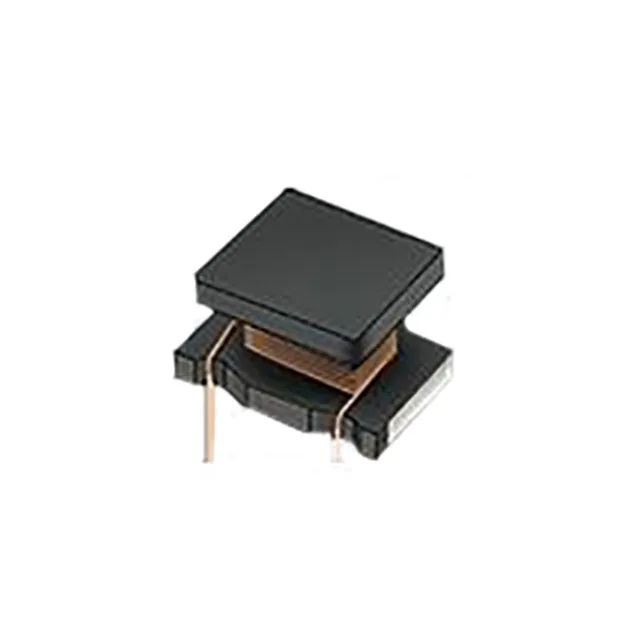
The LQH32MN680J23L is a 68 µH drum-core wirewound inductor from Murata's LQH32 series, rated for 80 mA continuous current. The 5.5 Ohm max DCR means at full rated current the I²R loss is about 35 mW — negligible for most circuits but worth checking if the inductor sits in a high-ambient or tightly enclosed power stage where every milliwatt of self-heating adds up. The 9 MHz self-resonant frequency tells you the inductor stops looking inductive above that point — it's a good fit for DC-DC converters switching in the hundreds of kHz to low MHz range, or as a low-pass filter element below 9 MHz. Above SRF the impedance becomes capacitive and the part no longer functions as intended.
Unshielded construction — layout awareness needed
This is an unshielded drum-core inductor. The open magnetic path means stray flux can couple into nearby traces, ground planes, or adjacent inductors. In a dense PCB layout — especially near sensitive analog or RF sections — leave a keep-out zone around the part or rotate it 90° relative to the nearest magnetic component to minimize cross-talk. The 1210 (3225 Metric) footprint is a standard chip size that places easily with pick-and-place and is straightforward to rework with a hot-air station. The ferrite core material gives stable inductance over temperature and frequency within the operating band, but the unshielded nature is the main trade-off: you get a lower DCR for a given inductance compared to a shielded part of the same size, at the cost of radiated field.
Active production — no lifecycle risk for BOM planning
Operating temperature range is -40°C to 85°C, covering industrial and outdoor applications. The ±5% tolerance on the 68 µH value is tight enough for most filtering and energy-storage roles; if your circuit requires a tighter tolerance, the LQH32 series includes ±2% and ±3% variants at the same footprint.