120 µH at 75 mA — where this fits in a filter or bias line
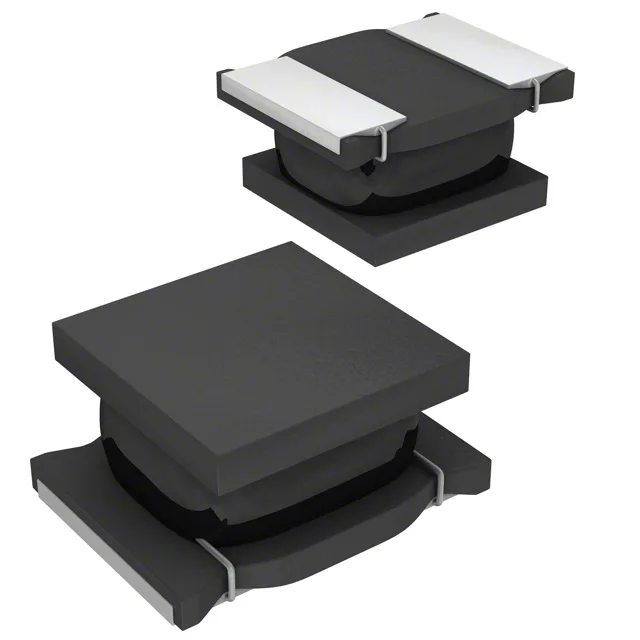
The LQH32MN121J23L: The 120 µH inductance at test frequency 1 MHz places this in the LQH32 series as a mid-value energy-storage or filtering inductor. The 75 mA current rating is the DC bias ceiling before inductance starts to roll off due to core saturation — for a 50 mA load you have 50 % margin, which keeps the incremental inductance stable. Unshielded drum-core construction means the magnetic field extends beyond the package. In a dense PCB layout, the stray field can couple into adjacent signal traces or other inductors — keep a keep-out zone around the part or use a shielded variant if crosstalk is a concern. Operating temperature range is -40 °C to 85 °C, which covers most industrial and commercial environments but not extended automotive under-hood or high-temp telecom enclosures. The ferrite core material has a Curie point well above 85 °C, so the inductance drift over temperature is dominated by the core's permeability curve, not a phase change.
DCR and Q factor — the AC loss picture at 796 kHz
8 Ω max DC resistance is the copper loss at DC. At 796 kHz the Q factor is 40 minimum — this tells you the ratio of reactance to effective AC resistance at that frequency. For a resonant tank or a filter operating near 796 kHz, the Q of 40 means the 3 dB bandwidth of the LC tank is about 2 % of the centre frequency, which is useful for narrowband filtering but may be too sharp for wideband ripple suppression. Self-resonant frequency is 7.5 MHz. Above this frequency the inductor behaves capacitively — the parasitic winding capacitance resonates with the inductance. For any application above about 1.5 MHz (20 % of SRF as a rule of thumb), the impedance starts to deviate from the ideal inductive curve. Keep the operating frequency below 2 MHz to stay in the inductive region with margin.
Surface-mount 1210 — footprint and reflow
The nonstandard case designation means the pad layout follows the 1210 footprint per the manufacturer's land pattern — standard 1210 solder pads with a 0.50 mm centre gap work. The ferrite core is not moisture-sensitive (MSL 1 typical for this construction), so no bake-out is needed before reflow. Supplied in tape-and-reel or cut-tape options. For volume production the reel quantity is the standard 7-inch reel count for 1210 inductors; for prototypes the cut-tape version lets you order small quantities without the reel fee.
Sourced through independent distribution channels. No minimum order quantity constraints beyond the reel or cut-tape packaging increments.