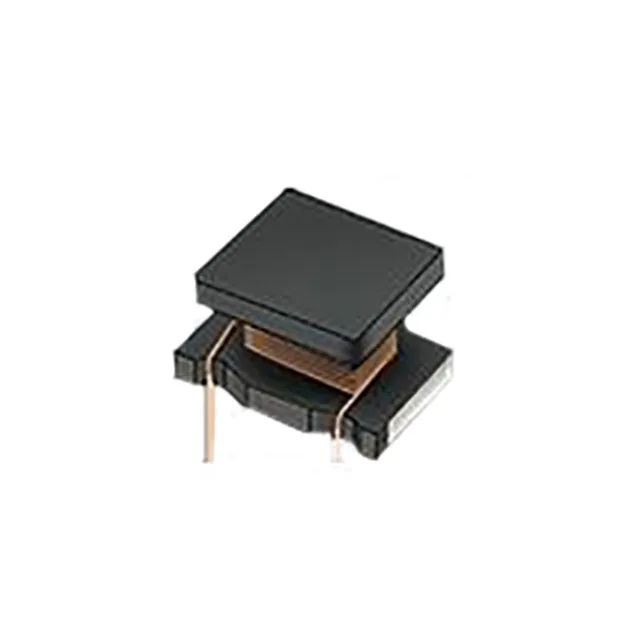
22 µH at 250 mA — the DCR and saturation ceiling
The LQH32DN220K53L is a Murata drum-core wirewound inductor in the LQH32 series, delivering 22 µH ±10% with a rated current of 250 mA. The 923 mOhm max DCR sets the I²R loss floor — at full rated current the self-heating is roughly 58 mW, which is negligible in most 1210 footprints but matters if the inductor sits next to a hot regulator. Saturation current is specified at 250 mA, matching the rated current — this means the inductance holds within tolerance up to the full rated current, then rolls off sharply. For a 250 mA load the margin is tight; a 300 mA transient peak will push the core into saturation and the inductance drops, so the downstream filter cap must absorb the excess ripple.
Self-resonant frequency and the usable band
Self-resonant frequency is 19 MHz. Above this frequency the inductor behaves capacitively — the effective inductance drops and the impedance rises. For a buck converter switching at 2 MHz, the 19 MHz SRF gives roughly a decade of margin; for a 10 MHz switching regulator the margin is under 2× and the parasitic capacitance starts to dominate the impedance at the switching harmonic. Inductance is tested at 1 MHz, which is the standard test frequency for this value range. The ferrite core material sets the permeability curve — expect the inductance to stay flat from DC to roughly 5 MHz, then roll off as the core losses increase toward the SRF.
1210 footprint and reflow profile
The unshielded construction means the magnetic field extends beyond the body — keep a keep-out zone of at least 0.5 mm from adjacent traces carrying sensitive analog signals or high-impedance nodes to avoid coupling. Operating temperature range is -40°C to 105°C, which covers industrial and automotive cabin environments. The ferrite core material has a Curie temperature well above 105°C, so the inductance drift over temperature is dominated by the core permeability curve — expect roughly ±5% change from 25°C to 105°C.