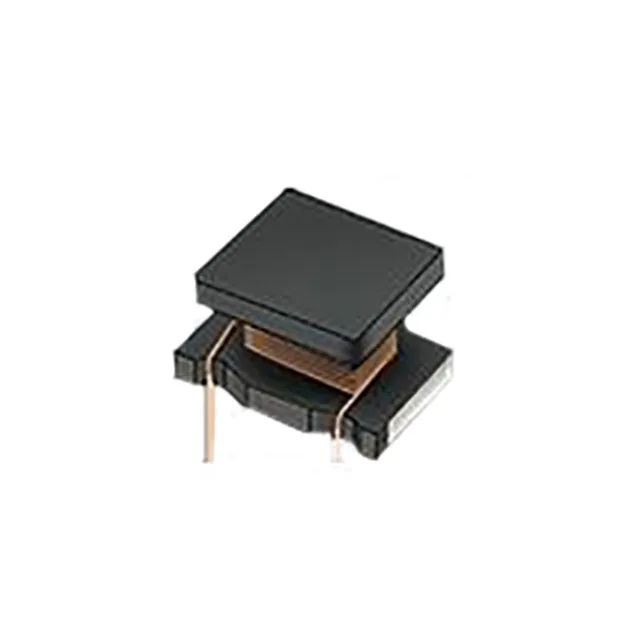
47 µH wirewound for DC-DC filtering and bias-T networks
The Murata LQH32CN470K23L is a 47 µH unshielded wirewound inductor in the LQH32 series, built on a ferrite core with a drum-core construction. It is rated for 170 mA continuous current with a maximum DC resistance of 1.69 Ohm — the DCR figure sets the I²R heating floor for the current path, so the 170 mA rating already accounts for the temperature rise at that resistance.
Self-resonant frequency and impedance roll-off
The self-resonant frequency (SRF) is 15 MHz — above this point the inductor behaves capacitively, so the effective filtering band stops well before that. For a buck converter switching at 1 MHz, the 47 µH value places the SRF more than a decade above the fundamental, keeping the impedance inductive across the switching harmonics that matter. Inductance is tested at 1 MHz, which is the standard Murata test frequency for this value range. The ±10 % tolerance is typical for power-grade wirewounds; a tighter (±5 %) grade would cost more and is rarely needed for DC-DC output filters where the loop compensator absorbs the inductance spread.
Surface-mount footprint and temperature envelope
The unshielded construction means the external field couples into adjacent traces — keep a keep-out zone under the part on inner layers and avoid routing sensitive analog lines directly beneath it. The ferrite core material is stable across this band; the main drift is the DCR increase with temperature, which reduces the saturation current margin at the hot end.