100 µH at 100 mA — what the DCR and SRF mean for your filter
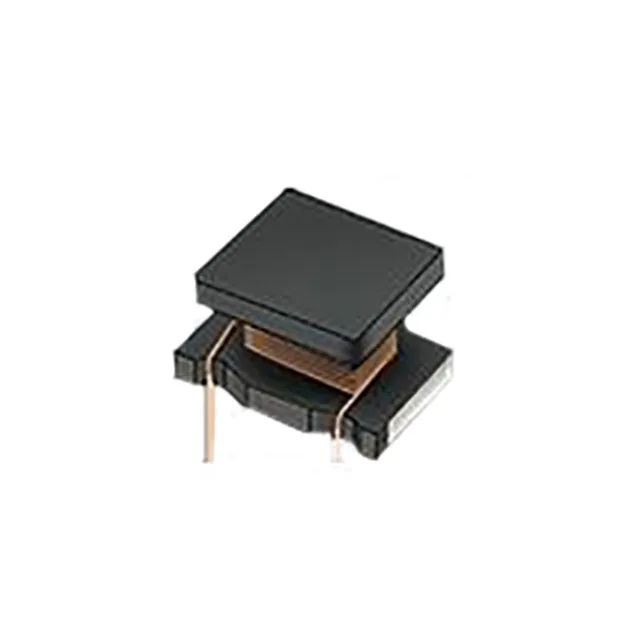
The LQH32CN101K53L is a 100 µH unshielded drum-core wirewound inductor in the Murata LQH32 series, rated for 100 mA continuous current with a maximum DC resistance of 4.55 Ohm. The self-resonant frequency is 10 MHz, tested at 1 MHz. Below 10 MHz the part behaves as an inductor; above it the winding capacitance dominates and the impedance becomes capacitive. For a 100 µH value, 10 MHz SRF is typical of a ferrite drum-core construction, meaning this inductor filters conducted noise effectively in the low-MHz range — think switching regulator input/output filters or DC bus ripple attenuation below 5 MHz.
Unshielded ferrite core — where it fits and where it doesn't
The ferrite core is unshielded, so the magnetic field radiates from the open drum structure. In a dense PCB layout, this flux can couple into adjacent traces, sensitive analog circuits, or wireless antennas. The part works well when placed with at least a few millimeters of clearance from noise-sensitive nodes, or when the application itself is tolerant of radiated field — for example, a low-frequency filter on a power input line or a DC bias choke in a sensor supply. The surface-mount package reflows on a standard lead-free profile; no special pad geometry beyond the recommended land pattern in the Murata application note for the LQH32 series.
Active production — sourcing and compliance
The ferrite core permeability shifts with temperature, so the ±10% inductance tolerance should be verified at the application's thermal extremes if the filter cutoff frequency is critical.