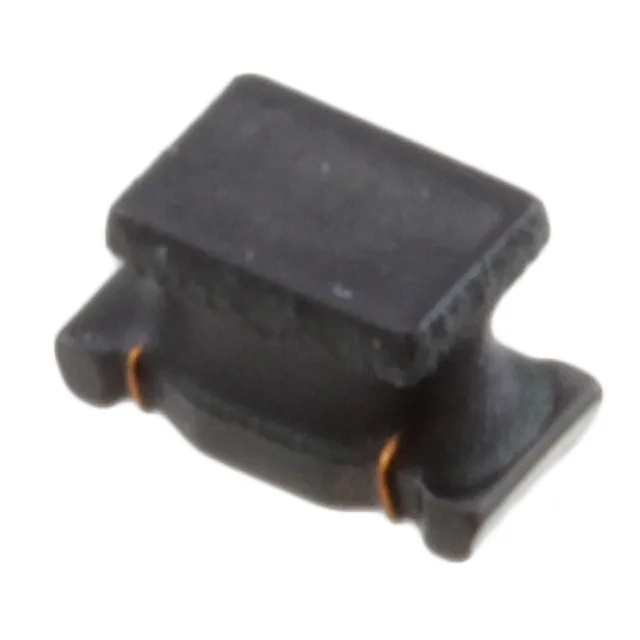
47 µH at 55 mA — the BOM-fit reality
The LQH31MN470J03L is a 47 µH drum core wirewound inductor from Murata's LQH31 series, rated for 55 mA continuous current with an 8 Ω DC resistance. That DCR is the dominant loss term at this current — expect roughly 24 mW of self-heating at full rated current, which stays within the 85 °C ceiling in still air. The unshielded construction means the magnetic field extends beyond the 1206 footprint — keep sensitive traces or adjacent magnetics at least one part-width away to avoid coupling. Ferrite core material gives stable inductance up to the 10 MHz self-resonant frequency; above that the part behaves capacitive.
Last Buy — what it means for your BOM line
Murata has flagged the LQH31MN470J03L as Last Buy. That means the manufacturer is no longer accepting blanket orders — remaining inventory is being consumed, and once it's gone, this exact order code will not be produced again. No official successor part number has been published for this specific inductance/tolerance combination.
Q factor and frequency ceiling
The Q factor of 40 at 2.5 MHz tells you the inductor's efficiency at that frequency — the ratio of stored energy to dissipated energy per cycle. Below 2.5 MHz the Q is higher; above it the core losses and skin effect in the wire start to dominate, and the Q drops. The self-resonant frequency at 10 MHz is the hard ceiling — above that the inductor looks capacitive and the circuit stops behaving as intended. The inductance is tested at 1 MHz, which is well within the flat-band region. If your switching regulator or filter operates above 5 MHz, the effective inductance will be lower than 47 µH due to the approach to self-resonance — derate accordingly.
1206 footprint — rework and layout
The terminations are on the short ends, so the inductor sits with the winding axis parallel to the board. Reflow profile follows standard lead-free solder curves for a ferrite-core component; no special bake-out needed unless the tape has been exposed to high humidity. Unshielded means the magnetic field fringes out the top and sides — keep the part away from ferrous mounting hardware or enclosure walls that could shift the inductance. The ±5% tolerance is tighter than the ±10% or ±20% common on power-grade inductors, so this part suits tuned circuits or filters where the inductance value needs to stay within a narrow window.