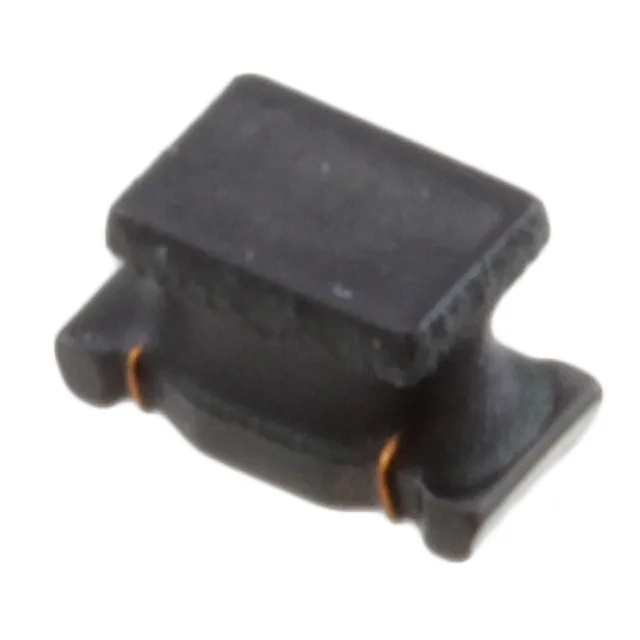
What the 3.3 µH and 130 mA mean for your circuit
The LQH31MN3R3J03L is a 3.3 µH drum-core wirewound inductor in the LQH31 series, rated for 130 mA continuous current with a maximum DC resistance of 793 mOhm. At 130 mA, the I²R loss is about 13.4 mW — negligible for most circuits, but the DCR matters for efficiency in a low-current DC-DC converter where the inductor sees the full load current. The self-resonant frequency is 38 MHz, so this inductor is usable in filtering and DC-DC switching applications up to roughly 10-15 MHz before parasitic capacitance starts to bypass the inductance. The Q factor of 35 at 8 MHz tells you the energy storage efficiency is decent at that frequency — expect the Q to peak near the self-resonant region. It is unshielded, so magnetic flux will couple into adjacent copper pours or traces. On a dense board, leave at least one inductor width of clearance to sensitive signal paths, or rotate the part 90 degrees to the aggressor trace.
Package and rework considerations
Supplied in Tape & Reel (TR) or Cut Tape (CT) — pick-and-place friendly. The 1206 package is forgiving for prototype hand assembly; just pre-tin one pad, reflow the part into place, then solder the other side.
Last Buy — what it means for your BOM
Murata has flagged this part as Last Buy. That means the manufacturer is winding down production — there may be a last-time-buy window, after which the part will be discontinued. If this inductor is on your active BOM, you need to either secure a lifetime buy quantity or qualify a replacement before the LTB closes. No official successor or pin-compatible alternative is listed in the available records. The LQH31 series includes other inductance values and tolerances, but a direct drop-in replacement for 3.3 µH at 130 mA in the same package would need to be sourced from another series or manufacturer — expect a requalification cycle.
It does not meet the automotive AEC-Q200 grade (typically -40°C to +125°C or +155°C), so avoid it for under-hood or engine-bay designs. The ferrite core material is stable across this range, but the DCR will increase with temperature by roughly 0.4%/°C. At 85°C ambient, the DCR rises to about 1.0 ohm, increasing the I²R loss by 25% — factor that into your thermal budget if the inductor is near a hot component.