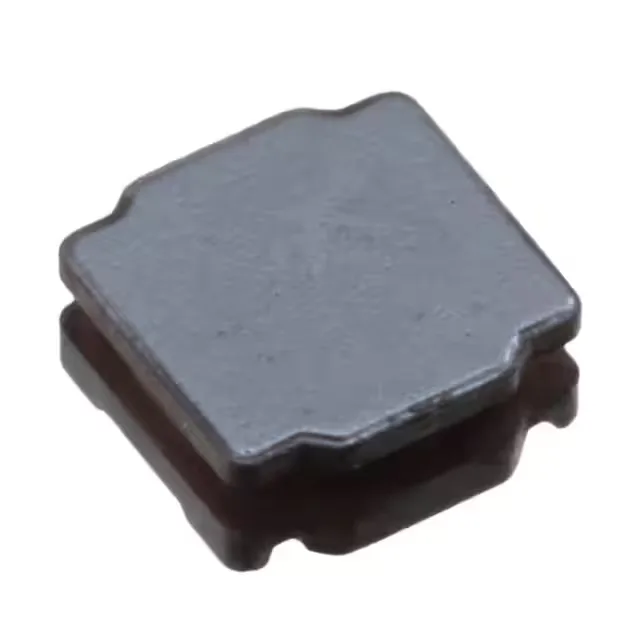
4.7 µH, 1.29 A — saturation headroom is tight
The LQH2HPZ4R7MJRL: Rated current is 1.29 A, and the saturation current (Isat) is 1.23 A — only 5% below the rated figure. In a buck converter, the inductor sees a DC bias plus an AC ripple current; if the peak of the ripple pushes the total above 1.23 A, the inductance drops sharply and the ripple current climbs, risking output voltage ripple and thermal runaway. The designer should derate the DC load current to leave headroom for the ripple component — a rule-of-thumb is to keep the peak current at or below 80% of Isat. DC resistance is 204 mOhm max. At 1.29 A DC, the I²R loss is 0.34 W — negligible for a 1008 package's thermal budget if the board has adequate copper pour, but worth checking if the ambient is near the 105 °C operating limit.
AEC-Q200 — the automotive qualification floor
Rated to AEC-Q200, the automotive passive-component stress standard. For an ECU, BMS, or ADAS power stage, this qualification is the baseline — no need for a separate qualification run. Operating temperature range is -40 °C to +105 °C. The 105 °C ceiling is typical for under-hood or cabin electronics; for engine-bay locations that see 125 °C ambient, a higher-temperature-rated inductor would be needed.
Shielded ferrite core — EMI containment matters
Shielded construction with a ferrite core. The shield reduces the external magnetic field, which is important when the inductor sits next to sensitive analog or RF traces — common in automotive sensor modules or infotainment power rails. The 40 MHz self-resonant frequency is well above the 1–4 MHz switching frequencies of typical automotive DC-DC converters, so the inductor behaves as a pure inductance in the power path without parasitic resonance. Package is 1008 (2520 metric), 2.5 mm x 2.0 mm footprint, 1.0 mm seated height. The low profile suits mezzanine or multi-layer board designs where component height is constrained.