4.7 µH, 700 mA — the parametric fit for the BOM line
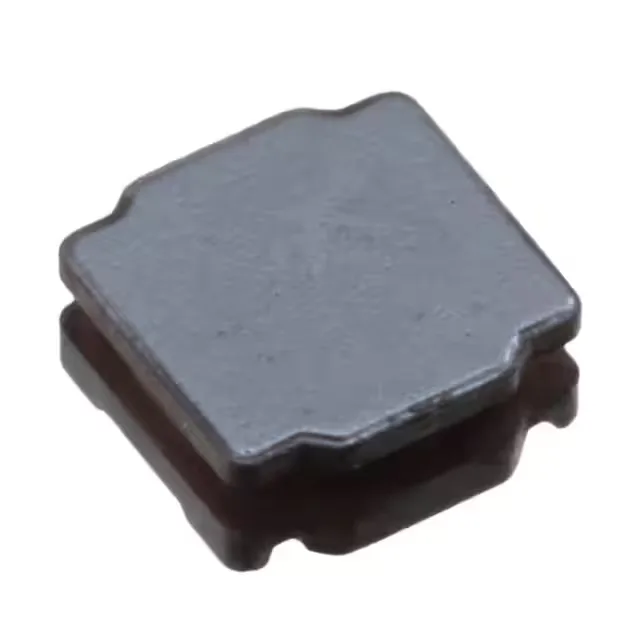
The Murata LQH2HPN4R7MG0L is a shielded drum-core wirewound inductor in the LQH2 series, offering 4.7 µH inductance at a rated current of 700 mA. The 432 mOhm max DCR sets the I²R loss floor — at full rated current, expect about 212 mW of copper loss, which factors into the thermal budget of the power rail. The saturation current is specified at 1 A — this is the hard ceiling where inductance typically drops by 30% or more. For a DC-DC converter input or output filter, the peak inductor current (including ripple) must stay below 1 A to avoid abrupt current slope changes that destabilise the control loop.
Frequency range and self-resonance
The self-resonant frequency is 60 MHz. Above this frequency, the inductor's parasitic capacitance dominates and the component behaves capacitively. For switching converters operating below 10 MHz, this provides ample margin — the inductor stays inductive across the fundamental and the first few harmonics. Inductance is tested at 1 MHz, which is the standard test frequency for this value range. The ferrite core material (not specified beyond 'Ferrite') has a frequency-dependent permeability — at higher frequencies, core losses increase and effective inductance may drift. The 60 MHz SRF is the practical upper bound.
Package and board integration
The shielded construction contains the magnetic field within the ferrite shield — this reduces EMI coupling to adjacent traces and components, which is critical in dense layouts where the inductor sits near sensitive analog or RF circuitry. The ferrite core's Curie temperature is well above 85°C, so no abrupt inductance drop occurs within the rated range — derating is driven by the wire insulation and solder joint reliability, not the core material.
Obsolete — sourcing through independent channels
Murata has marked the LQH2HPN4R7MG0L as Obsolete. No official successor order code is recorded from the manufacturer. No pin-compatible direct replacement from Murata's active LQH2 series is documented; a parametric search against the 4.7 µH, 700 mA, 1008 footprint is the practical path for a BOM substitution.