Parametric fit for the DC-DC rail
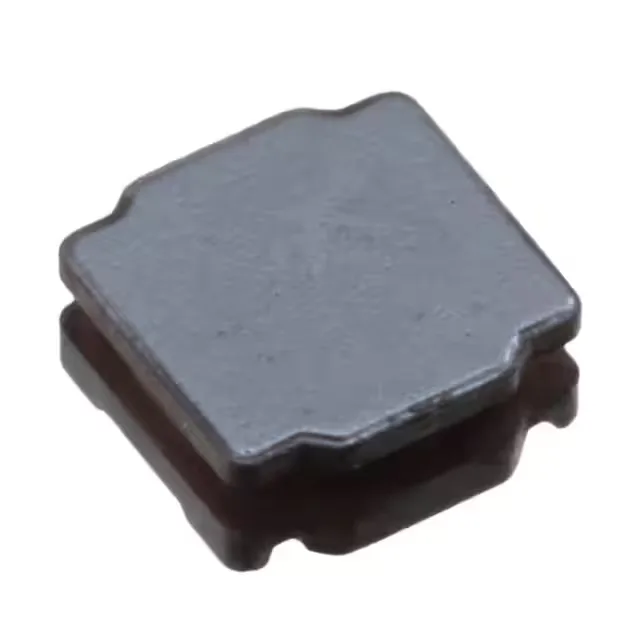
The LQH2HPN1R5NJRL is a 1.5 µH shielded wirewound inductor from Murata's LQH2 series, built on a ferrite drum core in the 1008 (2520 Metric) surface-mount footprint. Its 1.08 A continuous current rating and 2.2 A saturation current (Isat) define the usable DC bias range — the inductance holds within tolerance up to the saturation limit, beyond which the core loses stored energy and the inductor behaves like a short. The 90 mΩ maximum DCR sets the I²R conduction loss: at 1.08 A, that is roughly 105 mW of self-heating, which must be factored into the thermal budget alongside the ambient temperature. The 95 MHz self-resonant frequency (SRF) means this part is suited for switching converters operating well below that threshold — typically 1-4 MHz buck regulators where the parasitic winding capacitance does not yet dominate the impedance. The ±30% tolerance on the 1.5 µH nominal value is typical for power-grade ferrite inductors; the actual inductance at the operating DC bias will shift downward from the zero-bias value per the core material's BH curve, so the converter's compensation and ripple current should be designed around the minimum inductance case.
Board integration and thermal envelope
The shielded construction contains the magnetic flux within the core, reducing radiated EMI to adjacent traces and sensitive analog circuitry; this is critical when the inductor sits near a wireless transceiver or high-impedance sensor front-end. The tape-and-reel packaging supports automated pick-and-place at high throughput; the cut-tape option is available for prototyping or low-volume builds.
Sourcing posture and lifecycle
No pin-compatible second-source or successor is listed — the LQH2HPN base product number is the ordering prefix for the series, and any alternative would require a different inductance value or package size.