What the 1.7 A rating means for your rail
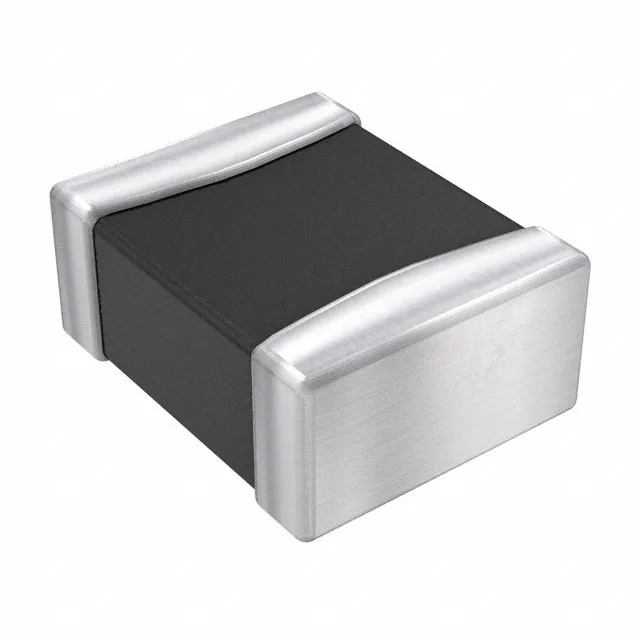
The DFE252010P-2R2M=P2 is a shielded wirewound inductor from Murata's DFE252010P series, built with a flat-wire winding on an iron powder core. The 1.7 A continuous current rating is the DC bias limit before the winding temperature rise hits the datasheet ceiling — this is the number to use for steady-state rail sizing, not the saturation current. Saturation current is listed separately at 2.6 A — the inductance drops by 30% at that point. For a buck converter output choke, the peak inductor current during a load transient or start-up should stay below the 2.6 A figure to avoid hard saturation and the resulting current spike through the switching FET. The 115 mOhm max DCR sets the conduction loss floor.
The shielded construction contains the magnetic flux within the core — adjacent traces and components on a dense board see minimal EMI coupling, which matters when the inductor sits near a sensitive analog rail or RF front-end. Tape-and-reel packaging supports both cut-tape samples and production reels. The flat-wire winding fills the bobbin more efficiently than round wire, giving a lower DCR for the same inductance and current rating compared to a conventional wirewound in the same footprint.