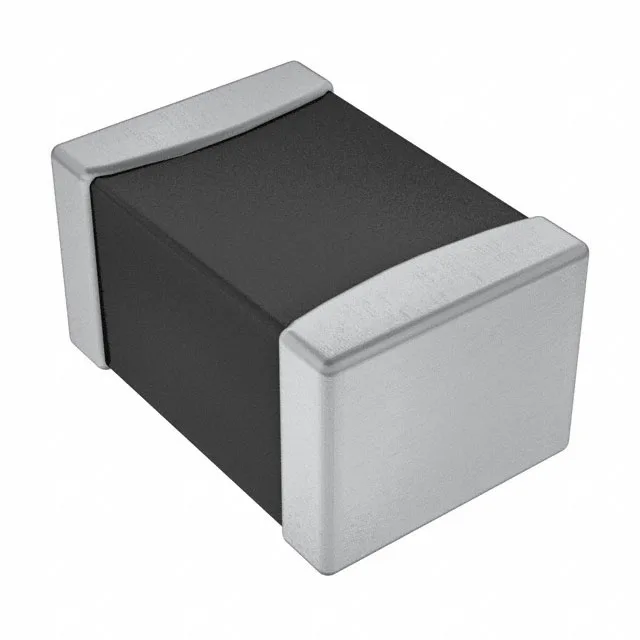
Power-line ferrite bead, 0402, AEC-Q200
The BLM15PX121SZ1D is a single-line ferrite bead from Murata's EMIFIL® BLM15 series, packaged in a 0402 (1005 metric) surface-mount body. AEC-Q200 qualification places this bead in the automotive-grade bin: it is tested for the thermal cycling, moisture resistance, and mechanical shock profiles required in under-hood and chassis-mounted electronics. The -55 to 125 °C operating range covers the full automotive temperature envelope with margin.
What the 120 Ohm impedance and 2 A rating mean for the BOM
The 120 Ohm impedance at 100 MHz is the bead's peak suppression point — it attenuates conducted noise in the 30-300 MHz band where switching regulators and digital clocks radiate. Below 10 MHz the bead behaves as a low-resistance conductor; above 300 MHz the impedance rolls off as parasitic capacitance dominates. The 2 A current rating is the DC bias limit before the ferrite material saturates and the impedance collapses. Derate this for ambient temperatures above 85 °C — at 125 °C the bead's self-heating plus ambient reduces the effective current ceiling by roughly 30 %, so a 1.4 A continuous load is a safer design-in for high-temp applications.
It is a current-design-in part, not a last-time-buy scavenge.