MCP23017-E/SO
Microchip Technology
IC XPNDR 1.7MHZ I2C 28SOIC
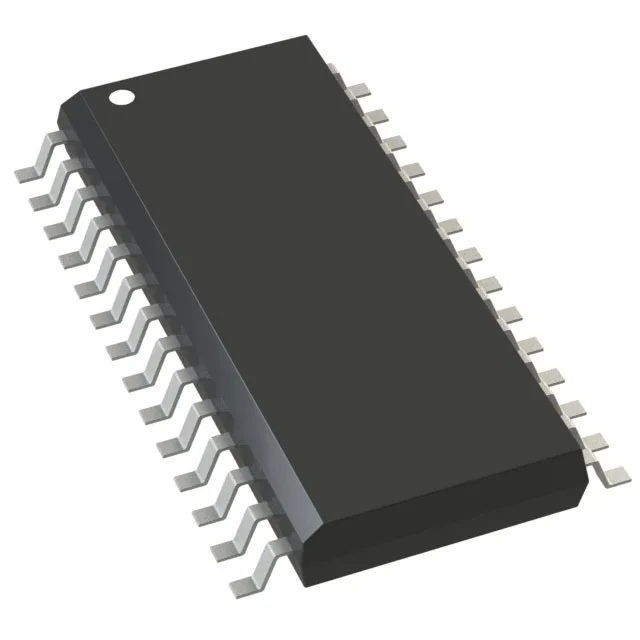
MOQ 1 · Tube · RoHS · EIA-481 · DAP/DDP · T/T
Technical specifications
| Parameter / Attribute | Specification / Value |
|---|---|
| Output type | Push-Pull |
| Mounting | Surface Mount |
| Supply voltage | 1.8V ~ 5.5V |
| Current - output source (Sink) | 25mA |
| Clock frequency | 1.7 MHz |
| Interface | I²C |
| Operating temperature | -40°C ~ 125°C |
| Package | Tube |
| Features | POR |
| Number of i (O) | 16 |
| Case | 28-SOIC (0.295\", 7.50mm Width) |
| Interrupt output | Yes |
Need Stock or a Drop-in Second-Source for MCP23017-E/SO?
Package: DIP-16 / SOIC-16 (SSOP-20 variant) · Pin-compatible replacements with immediate Shenzhen spot stock
The PCF8574 is the 8-bit I2C port expander of button matrices, relay cards, LCD backpacks and a thousand hobby and industrial boards: eight quasi-bidirectional pins, an interrupt output, and three address pins - with one family quirk that fills every forum: the A suffix is the SAME chip at a DIFFERENT I2C address. The plain part answers at 0x20-0x27, the A part at 0x38-0x3F, pin for pin and function for function per both NXP and TI - and the cheap module trade ships whichever die was cheaper that month, label notwithstanding. The other half of this page is behavioral: a quasi-bidirectional port is not a normal GPIO, and its write-1-to-read law explains most "the input does not work" posts in existence.
Verified Pin-Compatible Replacements (3 verified alternatives)
The A Suffix: Same Chip, Different Address
Shenzhen Spot Stock (24-48h Dispatch)
Electrical and functional identical - documented pin-for-pin and function-for-function by both vendors - with one firmware-visible fact: the fixed part of the I2C address is 0111 instead of 0100, moving the base from 0x20 to 0x38 (A0-A2 still pick one of eight).
Same 2.5-6V class and same bus behavior.
The Register-Mapped Modern Alternative
Shenzhen Spot Stock (24-48h Dispatch)
The other school of I2C expansion: 16 bits with true configuration registers - a direction register per port, programmable pull-ups, interrupt-on-change with captured state - where the PCF family has one quasi-bidirectional port and behavioral rules.
Same I2C culture with its own address range and pinout.
The Module Lottery - Scan Before Trust
Shenzhen Spot Stock (24-48h Dispatch)
The breakout boards sold as "PCF8574": frequently carrying the A-suffix die, with the address set by jumpers or traces whose defaults vary by batch - the same part and the same law, under a label that may not match the die.
Same I2C practice: bus pull-ups present on most modules, verify on all.
Buyer & Quality Checklist for Sourcing Alternatives
- The suffix is the address and only the address: PCF8574 answers at 0x20-0x27, PCF8574A at 0x38-0x3F, both pin-identical and function-identical (documented by NXP and TI). The substitution is a firmware constant - or a BOM fact in closed-firmware equipment.
- Module labels lie by omission: cheap "PCF8574" boards commonly carry the A die. Always bus-scan and read the address the device actually answers at before trusting any documentation.
- The quasi-bidirectional law: writing 1 makes a pin a weak pull-up (usable as input, reads the real pin state), writing 0 makes it a strong sink. Inputs must be written high first; outputs that need to source current need external help - this one sentence explains the family most-reported bug.
- The interrupt output fires on input CHANGE (edge), active low, and needs a pull-up: firmware that rebuilds state from the level alone misses events; edge-then-poll is the correct pattern.
- Low-side drive is the design pattern: LEDs and small loads between the pin and VCC, sunk by the port. High-side drive from a quasi-bidirectional pin is where magic smoke visits amateur boards.
- Address planning: the 0x20 and 0x38 ranges collide with plenty of other I2C citizens - map the whole bus address space before adding an expander, and remember A0-A2 are hardware straps per board, not firmware options.
Frequently Asked Technical Questions
Q: Can a PCF8574A replace a PCF8574?
A: Pin-identical and functionally identical - the difference is the fixed part of the I2C address: 0x38-0x3F against 0x20-0x27. It is a drop-in when the firmware address changes with it, or when nothing else occupies the address.
Q: Why does my PCF8574 module answer at address 0x38?
A: Because the board carries the A-suffix die - a common practice in the module trade regardless of the label. Scan the bus and read the responding address; it is the ground truth the firmware must match.
Q: Why does reading an input pin return 1, or an output not drive?
A: The quasi-bidirectional port law: write 1 to a pin that will be read (it becomes a weak pull-up input), write 0 to sink a load. Pins default high; reading a real input requires the port bit held high, and sourcing current high-side needs external circuitry.