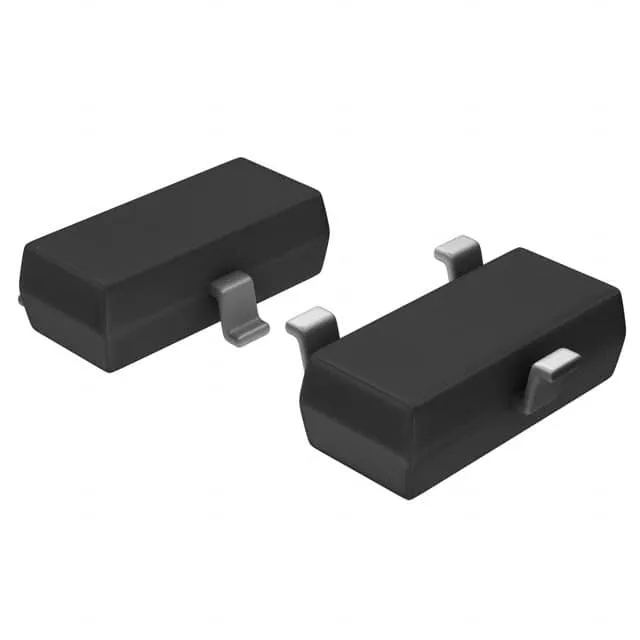
The Microchip MCP1700T-3302E/TT is a 3.3 V fixed-output low-dropout regulator rated for 250 mA and housed in a three-lead SOT-23-3 (TO-236-3/SC-59). Its defining characteristic is quiescent current: 4 µA typical. That places it in the class of regulators designed to live on battery rails and always-on supplies where every microamp of standing current is a BOM cost. With a 6 V absolute maximum input, the part is intended for a single Li-ion cell, two or three alkaline cells, or a clean 5 V logic rail; the 0.35 V maximum dropout at the full 250 mA load keeps usable range at the end of battery discharge where the cell voltage sags.
The MCP1700 family is an active, long-life Microchip line — ROHS3 compliant, production-current, and operating across -40 °C to 125 °C — so it is a low-risk anchor for portable instrumentation, remote sensors, wireless modules, and handheld tools that need a predictable 3.3 V rail in a nearly invisible footprint. Protection is comprehensive for the class: over-current, over-temperature, and short-circuit limiting, so a failed downstream load or a wiring fault does not take out the regulator. PSRR is modest at 44 dB at 100 Hz, entirely acceptable for logic and MCU rails but worth remembering if you plan to power sensitive analog from the same output. Selection considerations: at 250 mA this is a light-to-mid load part, so pair it with a separate higher-current regulator for heavier digital loads, and confirm your input/output headroom against the 6 V ceiling. For battery-powered designs where 4 µA standing current and a three-pin SOT-23 are the priority, the MCP1700T-3302E/TT is a proven, readily sourceable choice.