IR2110S
Infineon Technologies
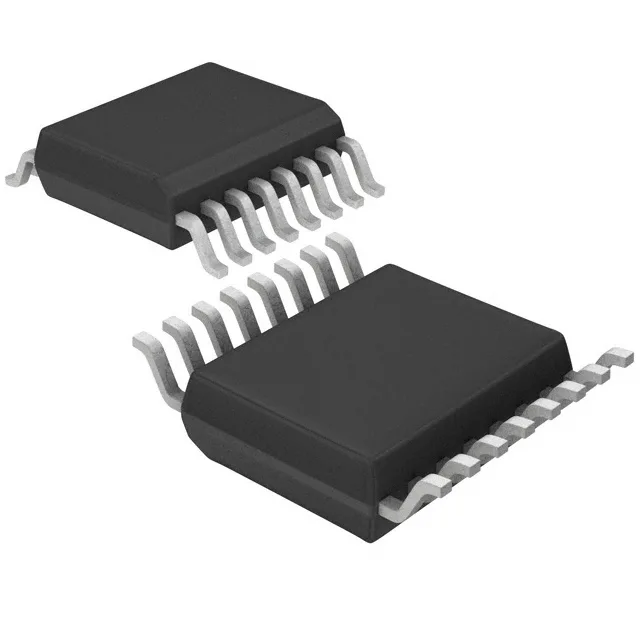
Volume pricing available from 1,000+ pcs per order.
MOQ 1 · Tube · RoHS · EIA-481 · DAP/DDP · T/T
Technical specifications
| Parameter / Attribute | Specification / Value |
|---|---|
| Gate type | IGBT, N-Channel MOSFET |
| Input type | Non-Inverting |
| Channel type | Independent |
| Mounting | Surface Mount |
| Supply voltage | 3.3V ~ 20V |
| Logic voltage - VIL, VIH | 6V, 9.5V |
| High side voltage - max (Bootstrap) | 500 V |
| Current - peak output (Source, sink) | 2A, 2A |
| Operating temperature | -40°C ~ 150°C (TJ) |
| Package | Tube |
| Case | 16-SOIC (0.295\", 7.50mm Width) |
| Number of drivers | 2 |
| Driven configuration | Half-Bridge |
| Rise (Fall time) | 25ns, 17ns |
Need Stock or a Drop-in Second-Source for IR2110S?
Package: DIP-14 / SOIC-16 · Pin-compatible replacements with immediate Shenzhen spot stock
The IR2110 is the gate driver that half the worlds inverters, welders, motor drives and induction cookers were built around - a 14-pin part with an independent high and low channel, a floating bootstrap supply for the high side, and enough drive for the workhorse IGBTs and MOSFETs of two decades. The family splits by the one number that matters at the rail: IR2110 carries a 500V offset, IR2113 a 600V offset, and everything else - pins, drive current, logic - is shared. The buying story has a modern chapter too: Infineons IRS2110/IRS2113 are pin-to-pin successors with a tighter internal clamp, and a row of third-party equivalents (the FAN7392, the TF2110 class) keeps the socket servable from multiple lines.
Verified Pin-Compatible Replacements (4 verified alternatives)
The 600V Member of the Same Die
Shenzhen Spot Stock (24-48h Dispatch)
Same driver design as the IR2110 with the offset raised to 600V (VB absolute max 625V against 525V): identical pins, identical +/-2A drive, independent high and low channels, bootstrap floating supply.
Gate drive 10V to 20V per channel; logic inputs 3.3V-compatible.
The Modern Successor Line
Shenzhen Spot Stock (24-48h Dispatch)
The pin-to-pin successor generation: same block diagram and pins with tighter specifications and an internal 20V clamp on all supplies.
The clamp changes the absolute maximums: supply pins end at 20V instead of 25V - a bench supply or bootstrap overshoot that a plain IR2110 survived can damage the IRS part.
The Fairchild-Line Equivalent
Shenzhen Spot Stock (24-48h Dispatch)
The Fairchild/onsemi member of the 2110-class: independent high and low channels, bootstrap high side, engineered against the same socket and application set.
Same gate-drive envelope; verify the offset rating of the exact variant against the bus.
The Cost-Line Drop-In
Shenzhen Spot Stock (24-48h Dispatch)
A Chinese-fab equivalent explicitly listed against IR2110/IR2113/IRS2113 class sockets for price-driven builds and repair volume.
Same functional envelope; validate per-lot against the original switching behavior.
Buyer & Quality Checklist for Sourcing Alternatives
- Pick by offset class against measured bus peaks: 500V (IR2110) or 600V (IR2113) - mains-derived rails and inductive loads regularly spike above the nominal figure.
- The bootstrap supply is a design, not a pin: the bootstrap capacitor, the gate resistors and the VS node layout decide whether the high side survives negative transients. When a driver dies repeatedly on the same board, look at the bootstrap network before the part.
- IRS2110/IRS2113 carry a 20V clamp on the supplies instead of 25V: check the rails and the bootstrap overshoot before substituting, especially where a bench supply or transients previously had headroom.
- IR2104-class parts are single-input half-bridge drivers with internal deadtime and lower output current - a different family. A design wired for independent HIN/LIN control does not want one.
- At power-up, the low side must initialize before the high side can bootstrap: startup sequences that skip this produce silent high-side failure - a classic when a repaired board works at the bench and fails in the enclosure.
- For fleet repairs, keep VBS within ratings during negative-bus recovery events: the successor datasheets spell out the Rg/CB/layout conditions, and they apply to every member of the family.
Frequently Asked Technical Questions
Q: What is the difference between IR2110 and IR2113?
A: Only the high-side offset rating: 500V against 600V, plus a tighter delay-matching spec on the 2113. Pins, drive current and logic are identical, and the 600V part substitutes for the 500V part everywhere.
Q: Is IRS2110 a drop-in replacement for IR2110?
A: Pin-to-pin and documented as such, with one discipline: the supplies are clamped at 20V instead of 25V, so verify rail and bootstrap voltages sit inside the tighter limit.
Q: Why does the high-side channel keep failing in my inverter repair?
A: Usually the bootstrap path: capacitor value and ESR, VS node layout and negative transient recovery. The driver absorbs the event first. Fix the bootstrap network and the board, or the new part dies the same way.