16Kbit FRAM on a 5V I2C bus — no write delays
The Infineon (Cypress) FM24C16B-GTR is a 16Kbit Ferroelectric RAM (FRAM) organized as 2K x 8, accessed over an I2C interface running at 1 MHz.
1 MHz I2C and 550 ns access — what the timing means
The I2C interface runs at 1 MHz, the fast-mode-plus ceiling. Each byte transfer on the bus takes 8 clock cycles plus the start/stop overhead, so a 16-byte page write completes in roughly 160 µs — no waiting for an internal erase cycle. The 550 ns access time is the cycle time the host sees on reads; this is fast enough that the I2C bus itself, not the memory, is the throughput bottleneck. If your host controller already supports 1 MHz I2C, this part will not add latency.
FRAM vs EEPROM — why this part exists
The FM24C16B-GTR uses FRAM technology, which stores data in a ferroelectric crystal instead of a floating gate. This eliminates the write-cycle delay and endurance limits of EEPROM: writes complete in the same time as reads (no page buffer to manage), and the part is rated for trillions of write cycles rather than the typical 1 million cycles of an EEPROM. For applications that write configuration data frequently — like energy meters logging consumption every second — this part removes the wear-leveling overhead and write-time blocking that EEPROM requires. The trade-off is the 5V-only supply rail; the FM24CL64B-GTR is the 3.3V sibling if your bus runs at 2.7V to 3.6V.
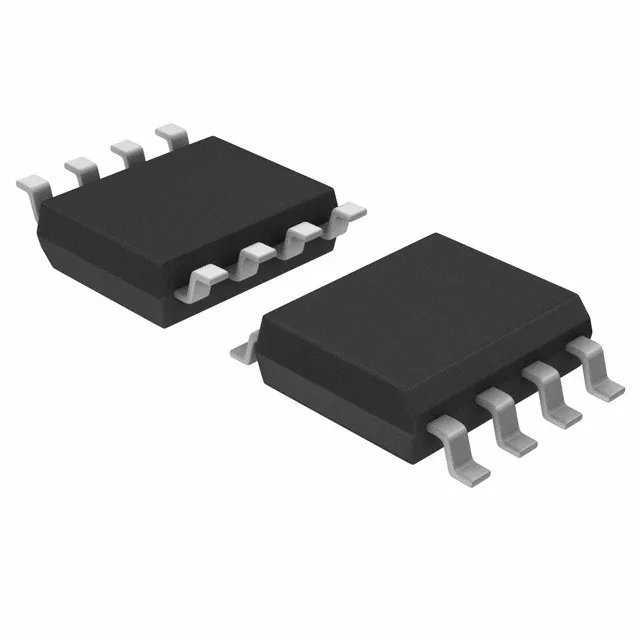
Package and footprint — 8-SOIC
The footprint is standard for 8-SOIC; no exposed pad or thermal considerations beyond normal FR4 copper pour.
It is ROHS3 Compliant, with no lead, mercury, cadmium, or other restricted substances above the threshold.