Transient suppression for 376 V rails
The 1.5KE440ABULK: When the line exceeds 418 V (breakdown minimum), the device conducts, clamping the surge to 602 V maximum at 2.5 A peak pulse current (10/1000 µs waveform).
What the clamp voltage means for your circuit
The 602 V clamping voltage is the ceiling the downstream components see during a transient. If your 376 V rail feeds a converter with a 650 V MOSFET, the 602 V clamp stays below the FET's Vds rating — the TVS protects the switch without needing an additional snubber. The 2.5 A peak pulse current at 10/1000 µs defines the surge the device can absorb in a single event; repetitive surges require derating per the datasheet's pulse-derating curve. For shorter pulses (e.g. 8/20 µs), the device handles significantly higher peak current — the datasheet's pulse-derating curve governs the safe operating area.
Package and board integration
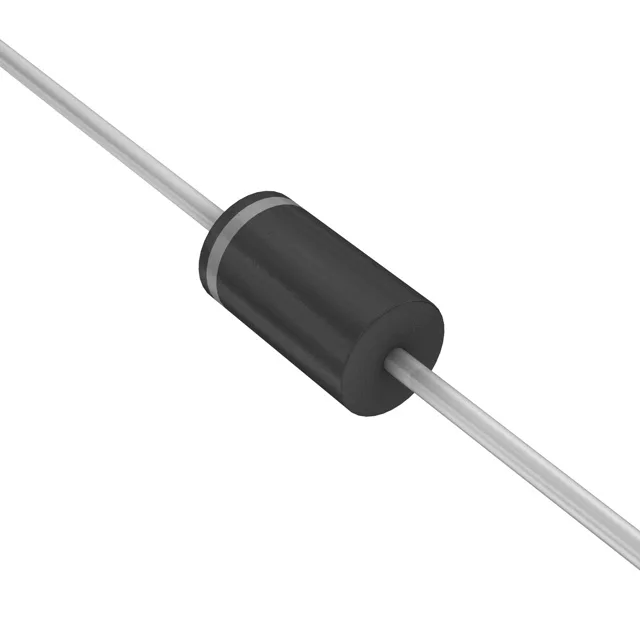
Supplied in a DO-201AA / DO-27 axial-lead through-hole package, the 1.5KE440ABULK is suitable for wave-soldering or hand-soldering onto a PCB. The axial leads allow flexible mounting — stand it upright for dense layouts or lay it flat for lower profile. The DO-201 footprint is standard across the 1.5KE series, so a single PCB layout accepts the full voltage range. Operating temperature spans -65°C to 175°C — wide enough for industrial enclosures, outdoor telecom cabinets, or engine-bay electronics where ambient heat is a factor. No AEC-Q grade is listed, so for automotive designs, verify the application's reliability requirements separately.