What the 1500W rating means in a real transient
The SMCJ9.0A-13-F: That power rating is the headline number, but the clamping voltage at the actual peak current is what decides whether the protected circuit survives. For this part, the maximum clamping voltage at the 97.4A peak pulse current is 15.4V — the rail you're protecting must tolerate that voltage without latch-up or oxide breakdown. The reverse standoff voltage is 9V, meaning the diode draws negligible leakage at any DC bias below 9V. The minimum breakdown voltage is 10V, so the device starts conducting between 10V and the 15.4V clamp. That 5.4V window between standoff and clamp is the trade-off: tight enough for a 12V rail, but you need to verify the downstream IC's absolute-max rating.
Package and board-fit for the DO-214AB SMC
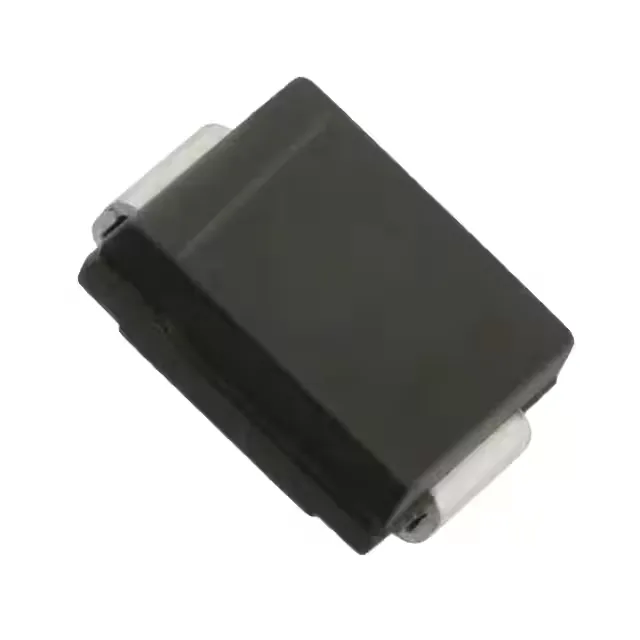
The DO-214AB (SMC) package is the standard surface-mount footprint for 1500W-class TVS diodes. The copper pad area under the cathode tab sets the thermal resistance to the board — a flooded copper plane on the top layer pulls heat out of the junction during the transient. The junction temperature range is -55°C to 150°C, so the part handles the self-heating from a 10/1000µs pulse without derating at typical ambient. No power line protection claim means this is a signal-rail or low-voltage bus protector, not a mains-side suppressor.
Active production and sourcing posture
Sourced through independent distribution channels against an RFQ.