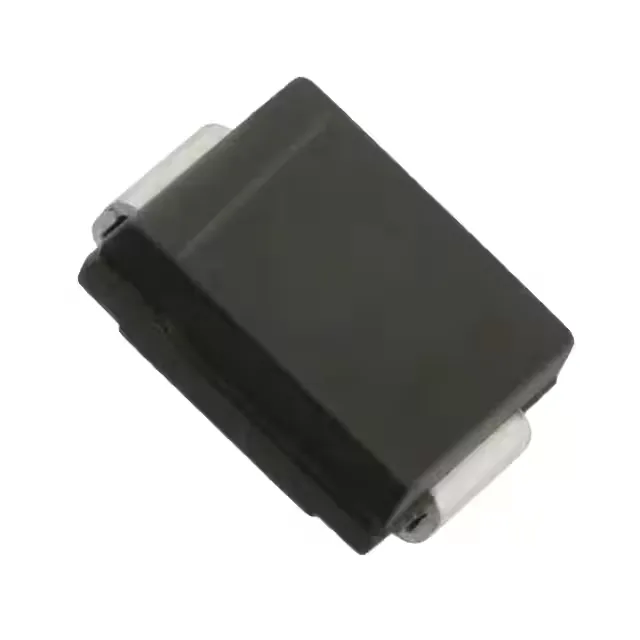
1500 W peak pulse — what the rating means for the protection window
The SMCJ8.5A-13-F: For a 8.5 V nominal rail, the clamping voltage clamps at 14.4 V max when the surge current hits 104.2 A, which is the peak pulse current at that same waveform. The reverse standoff voltage of 8.5 V means this diode starts conducting only when the line exceeds that level — below it the leakage is negligible and the protected circuit sees no load. The breakdown voltage range (9.44 V minimum) is where the device transitions from blocking to clamping, so the actual protection threshold sits above the standoff but well below the 14.4 V clamp ceiling.
DO-214AB SMC package and board-fit note
Housed in the DO-214AB (SMC) surface-mount package, the diode's copper tab on the cathode side carries the surge current into the PCB copper plane. The junction-to-ambient thermal resistance depends on the pad area — a 1 oz copper pour under the tab drops the thermal impedance significantly, which matters for repetitive surge events where the die temperature accumulates between pulses. The SMC footprint is larger than the SMA/SMB siblings, giving more margin for heat spreading on the board. The 150°C TJ max is the die limit — at sustained ambient above 85°C the derating curve applies, reducing the peak pulse power capability proportionally.