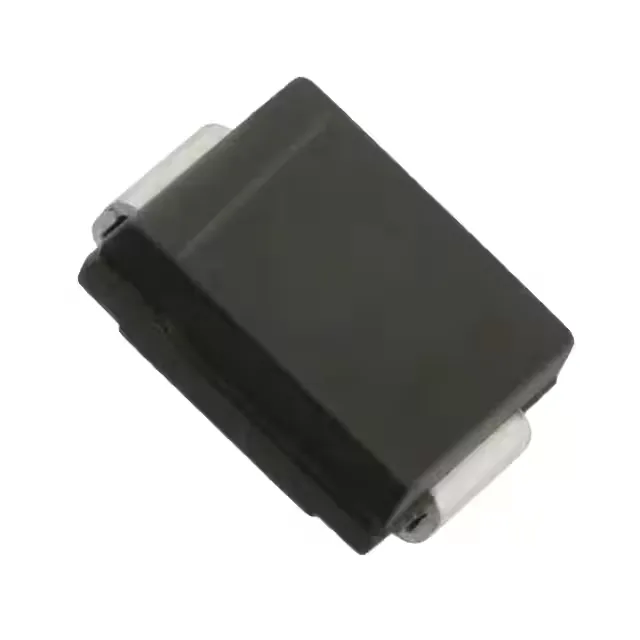
What the 1500W rating means when a surge hits
The SMCJ6.0CA-13-F: That 1.5 kW figure is the energy it can absorb and clamp in a single transient — a nearby lightning strike or an inductive load dump on a 6V rail. The part clamps at 10.3V maximum, so a 6V supply line sees the surge shunted before it reaches downstream silicon rated for, say, 8V abs-max. It handles 145.6A of peak pulse current at that same 10/1000µs pulse. That is a lot of current for a DO-214AB package — the die and bond wires are sized for it, but the PCB copper pour under the cathode tab is what sinks the heat. A skimpy trace starves the thermal path and the junction cooks.
Trigger window and the rail it guards
Reverse standoff is 6V — the rail can run at 6V all day without the diode leaking appreciably. Breakdown starts at 6.67V minimum, so a 6V rail with 5% tolerance (6.3V max) stays below the trigger threshold. The 10.3V clamp is where the voltage is held during the surge; a downstream DC-DC converter rated for 12V abs-max survives this with margin. Bidirectional — one device clamps both polarities. Useful on AC-coupled signal lines or on a DC rail where the transient can swing positive or negative relative to ground. No power line protection (says so), so do not use it on mains; this is a DC-rail or signal-line suppressor.
Package, temperature, and board-fit reality
DO-214AB (SMC) is the larger of the common SMC footprints — bigger than DO-214AA (SMA) or DO-214AC (SMB). The body is about 7.1 mm long, so it needs the pad geometry for that size. Supplied in Tape & Reel — the -13-F suffix signals the reel quantity (typically 3000 or 5000, depending on the reel size). Surface-mount reflow profile follows standard SnPb or Pb-free solder; the package is compatible with both.