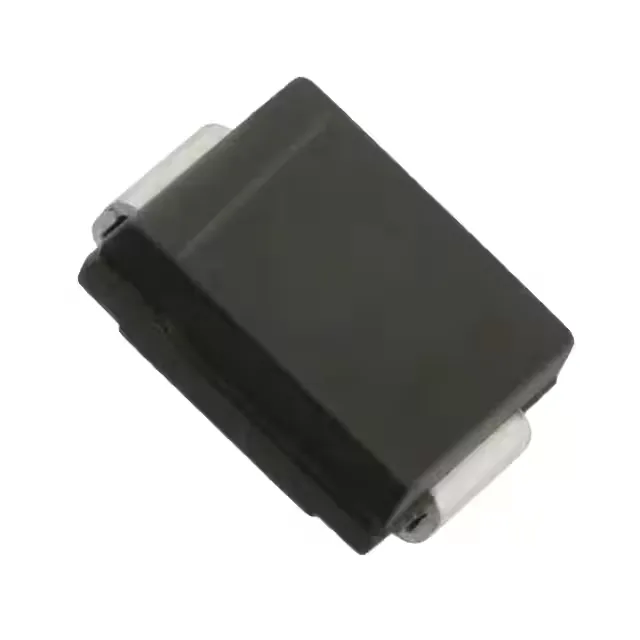
What the 1500W peak pulse rating actually means on a 26V rail
The SMCJ26CA-13-F: On a 26V nominal rail, the reverse standoff voltage (26V typ) sits below the rail tolerance, so the diode stays out of conduction during normal operation. When a transient exceeds the breakdown threshold (28.9V min), the device clamps at 42.1V max while shunting 35.6A peak pulse current. This is a bidirectional part — one device protects both polarities on the same line, which saves board space and BOM count compared to back-to-back unidirectional TVS diodes. The Zener-type clamping mechanism gives a sharper knee than an MOV or gas tube, so the protected rail sees less overshoot before the clamp engages.
Package and board-fit: DO-214AB SMC
The DO-214AB (SMC) package is the larger of the common SMT TVS packages — the body is roughly 7.0 mm x 6.0 mm with a 2.5 mm tall profile. The copper pad area under the cathode tab sets the thermal resistance; for a 1500W pulse, the junction temperature rise is a function of the PCB copper area, not just the package. A 1 oz copper pour of at least 50 mm² on the top layer keeps the junction within the -55°C to 150°C operating range during repetitive surge events. The SMC footprint is larger than the SMA/SMB siblings, which means the TVS can absorb more energy per pulse — the 1500W rating is tied to the package's ability to sink heat into the board. If you are replacing a smaller package TVS with this one, verify the pad geometry on the existing layout; the SMC lands are wider and the solder mask opening must match.
The base product number is SMCJ26, so the -13-F suffix indicates the tape-and-reel packaging variant (13-inch reel). The same die is available in cut-tape quantities for prototyping.