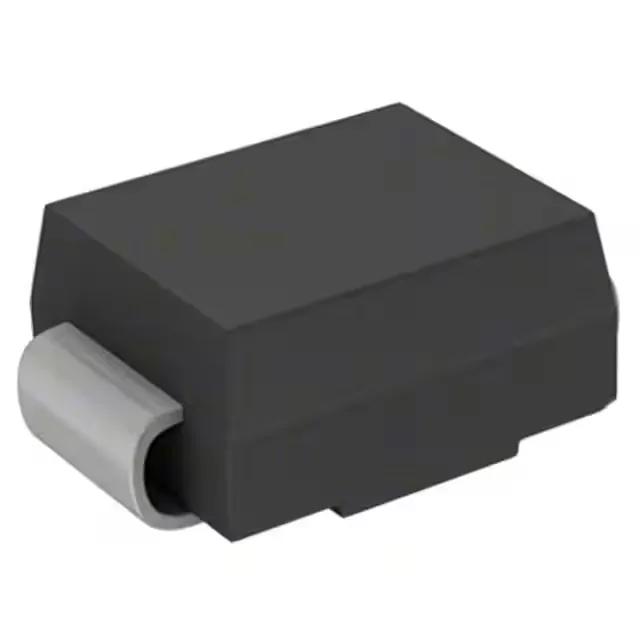
90V rail protection in a standard SMB footprint
The SMBJ90A-13: Its 100V minimum breakdown voltage and 146V maximum clamp voltage define the protection window — anything below 100V rides through, anything above 146V gets clipped.
What the ratings mean for your BOM
The 90V reverse standoff voltage (VRWM) is the maximum continuous DC voltage the diode can sit across without conducting. For a 90V rail, this part stays off until a transient pushes the line above 100V — the breakdown knee. The 146V clamp voltage is the worst-case peak the protected circuitry sees during a surge event. For a given transient energy, the clamp voltage determines the peak current — 4.1A at the 146V clamp. If your application sees repetitive surges or longer pulse widths, derate accordingly. The unidirectional configuration means one channel per device, with the cathode band marking the protected line side.