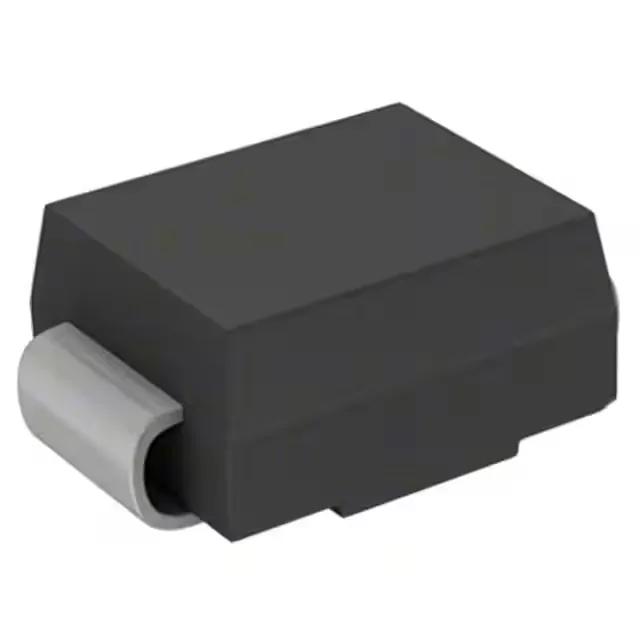
What the 600 W peak pulse rating means for your protection design
The SMBJ64CA-13-F: The 600 W rating is tested with a 10/1000 µs waveform — a standard surge shape for industrial and telecom equipment — so the diode absorbs a 5.8 A peak pulse current before the clamping voltage reaches 103 V. For a 64 V bus, that means the TVS holds the transient below 103 V even when the surge current hits the 5.8 A limit. The breakdown voltage starts at 71.1 V minimum, giving a guard band above the 64 V reverse standoff. The diode does not conduct at the normal rail voltage — it only starts clamping when the transient pushes the line above 71.1 V. This is a bidirectional device, so it protects signal pairs or DC lines where the polarity can reverse, without needing two diodes back-to-back.
Package and board integration
The supplier device package is also SMB, so the pad layout is consistent with other SMBJ voltage variants — a single PCB footprint can serve multiple rail voltages by populating the appropriate breakdown diode. Surface-mount assembly keeps the profile low for dense boards. General-purpose application means it suits telecom, industrial control, and consumer power buses.