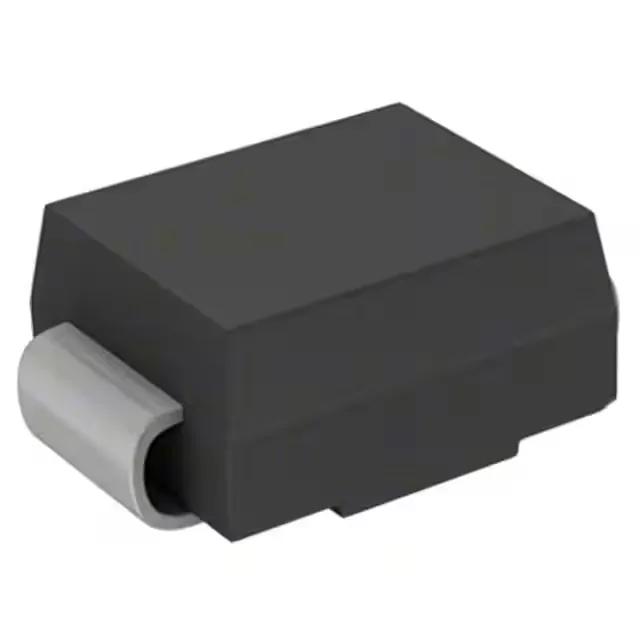
Clamping voltage and peak pulse — what the ratings mean for the supply rail
The SMAJ78CAQ-13-F: With a 78V reverse standoff (Vrwm), this TVS sits on a nominal 78V DC bus or a 48V automotive rail (e.g., mild-hybrid 48V systems) without conducting leakage. When a transient exceeds 86.7V breakdown (Vbr min), the device clamps to 126V max — the peak voltage the downstream circuitry must survive. The 400W peak pulse rating at 10/1000µs means it absorbs high-energy surges (e.g., load dump or alternator field decay) but is not intended for repetitive overvoltage events typical of continuous power-line clamping. AEC-Q101 grade ensures the part meets automotive PPAP documentation, reliability stress tests, and traceability requirements for OEM audit.
The AEC-Q101 qualification (Automotive series) is embedded in the part number, so the OE auditor expects PPAP-level documentation from the supply chain. The part is single-channel, bidirectional (one device protects both polarities), and does not include power line protection (: No), meaning it is sized for signal or low-power auxiliary rail protection, not the main battery bus.