400W peak pulse power, 70V standoff — the protection window for 48V nominal automotive rails
The SMAJ70AQ-13-F: The breakdown is clamped at 113V maximum, defining the voltage the downstream circuitry must survive during a transient event. Qualified to AEC-Q101, this part is certified for automotive-grade stress testing including temperature cycling, ESD, and humidity bias — the documentation an OEM auditor expects is on file. The operating junction temperature range spans -55°C to +150°C, covering underhood and engine-bay ambient conditions.
Clamping voltage and peak current — sizing the protection margin
At the 10/1000µs test pulse, the peak pulse current is 3.5A when the device clamps at 113V. For a nominal 48V bus (common in mild-hybrid and auxiliary automotive systems), the 70V standoff provides headroom against steady-state voltage variation before the TVS begins to conduct leakage current. The minimum breakdown voltage is 77.8V, which means the device starts clamping between 77.8V and the 113V maximum. This window determines the energy the TVS absorbs — the lower the clamping voltage relative to the circuit's absolute maximum rating, the more margin the protected IC sees.
Package and PCB integration — DO-214AC (SMA) surface mount
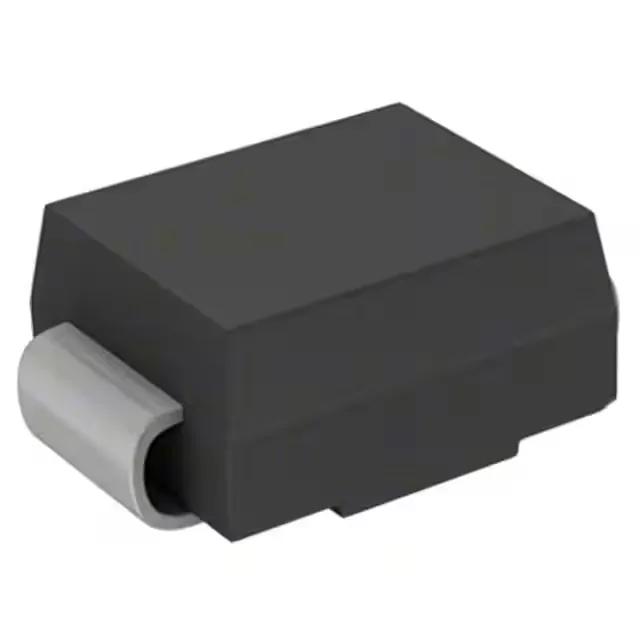
Housed in the DO-214AC (SMA) package, a standard surface-mount outline rated for the 400W pulse. The SMA footprint is shared across the SMAJ family, so a single PCB land pattern serves multiple voltage variants in the same BOM position — useful for design consolidation across harness protection points. The part is a single unidirectional channel, so two devices are needed per line for a bidirectional pair — common on AC-coupled or differential signal lines.