What the 24V standoff and 38.9V clamp mean for your rail
The SMAJ24A-13: When a transient exceeds the 26.7V minimum breakdown voltage, the device clamps at 38.9V maximum while shunting 10.3A of peak pulse current in the 10/1000µs waveform. The 400W peak pulse power rating defines the energy the die can absorb in a single event before the junction temperature exceeds the safe operating area. For a 24V nominal supply rail — common in industrial control, telecom, and automotive auxiliary buses — the 24V standoff means the diode sits transparently during normal operation. The 38.9V clamp gives roughly 62% headroom above the rail, which is typical for a Zener-based TVS protecting against ISO 7637-2 or IEC 61000-4-5 transients. The -55°C to 150°C junction temperature range covers both cold-start and under-hood thermal profiles.
DO-214AC SMA footprint and board-level fit
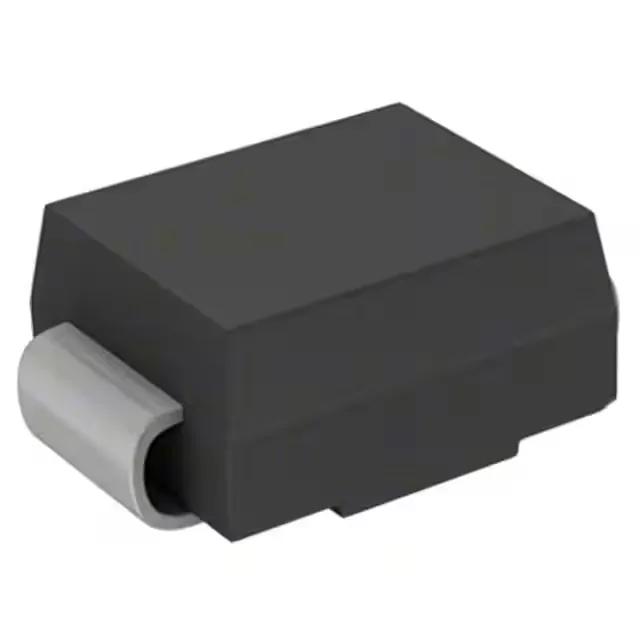
The SMAJ24A-13 comes in the DO-214AC (SMA) package with surface-mount termination. The supplier device package is designated SMA — this is the standard JEDEC outline for a 400W-class TVS. The cathode band on the body marks the unidirectional orientation; the anode is the tab side. The package footprint requires a solder pad per the DO-214AC land pattern in IPC-7351B, with the cathode pad typically extended for thermal relief under repetitive pulse conditions. The reel quantity is standard for the SMA package — the exact count depends on the reel diameter specified at order.
Obsolete — sourcing through independent channels
The 24V standoff, 38.9V clamp, and DO-214AC package are the three parameters that must match for a form-fit-function replacement if a cross-reference is considered — but no official second-source is recorded here.