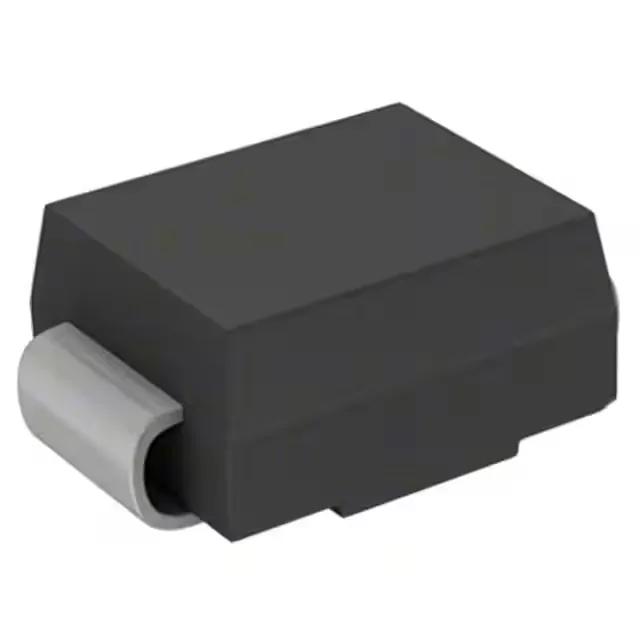
What the 400W rating means on a 17V rail
The SMAJ17CA-13: On a 17V nominal rail, the device clamps at 27.6V max — that 10.6V headroom above the working voltage is where the energy gets dumped. The 14.5A peak pulse current rating tells you the surge it can handle before the junction gives way. The 17V reverse standoff (working voltage) means this part sits on a 12V or 15V rail and stays off until a transient pushes past that threshold. Below 17V, the leakage is negligible; above it, the Zener breakdown conducts the surge to ground. Bidirectional — one device handles both polarities, which simplifies the BOM on AC-coupled or bipolar signal lines.
Housed in a DO-214AC (SMA) package, surface-mount. The SMA footprint is standard — same pad layout as the ubiquitous SMB and SMC siblings, though the body is smaller. The -13 suffix indicates Tape & Reel packaging (also available as Cut Tape). No power line protection (no internal crowbar or series element) — this is a pure shunt clamp. It sits across the rail and ground, not in series with the load. The SMA package's copper pad area under the cathode (cathode is the banded end) sets the thermal impedance; a solid pour on the PCB keeps the junction temperature rise within bounds during repetitive surges.