What the 600 W rating means for your circuit
The P6KE160CA-T: At a 136 V reverse standoff voltage (working voltage), it remains transparent to the signal; when a transient exceeds the 152 V minimum breakdown threshold, it clamps at 219 V maximum while shunting up to 2.7 A of peak pulse current. The 600 W rating is the product of the clamping voltage and the peak pulse current — a standard metric for comparing TVS diodes in the same waveform class. For a 24 VDC rail with a 136 V standoff, this part guards against transients that would otherwise punch through downstream silicon, but the 219 V clamp floor means the protected circuitry must tolerate that ceiling without latch-up or breakdown.
Obsolete — what that means for procurement
Diodes Incorporated lists the P6KE160CA-T as obsolete. For a BOM line that calls this exact part number, the supply channel is independent distribution — surplus and new-old-stock inventory sourced from factory overruns, broker networks, and end-of-life buybacks. Because the part is through-hole and from a mature Zener TVS family, the primary procurement risk is date-code consistency and lot traceability, not functional availability. A quote against the BOM quantity confirms the available date codes and any remaining factory-sealed reels before committing the line.
Board-fit and temperature envelope
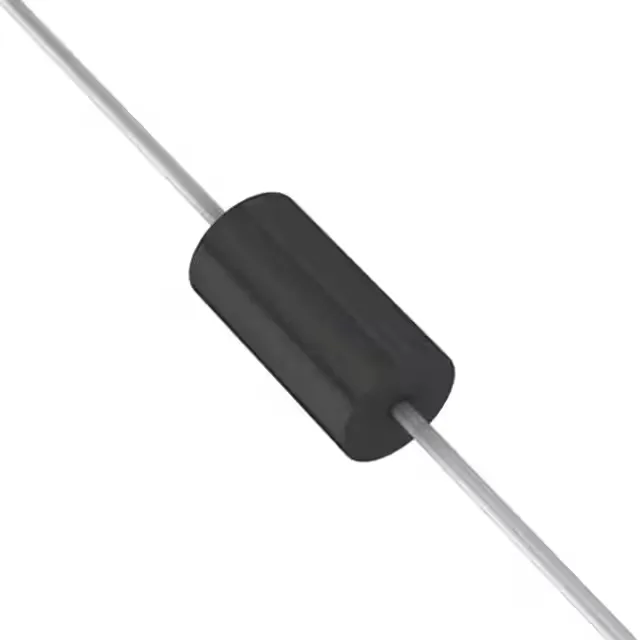
Housed in the DO-204AC (DO-15) axial-lead package, the P6KE160CA-T is a through-hole component — it solders into a plated hole on a single-sided or double-sided board and is typically wave-soldered. The DO-15 body measures roughly 7.6 mm long by 3.6 mm diameter; the axial leads are tin-plated copper and accept standard 0.032-inch (0.8 mm) PCB holes. The operating junction temperature range spans -55 °C to +175 °C, covering the full industrial and military temperature bands. In a hot environment — an outdoor telecom cabinet or an engine-bay ECU — the junction temperature stays within the derating curve as long as the average power dissipation does not exceed the 600 W peak rating derated linearly above 25 °C.