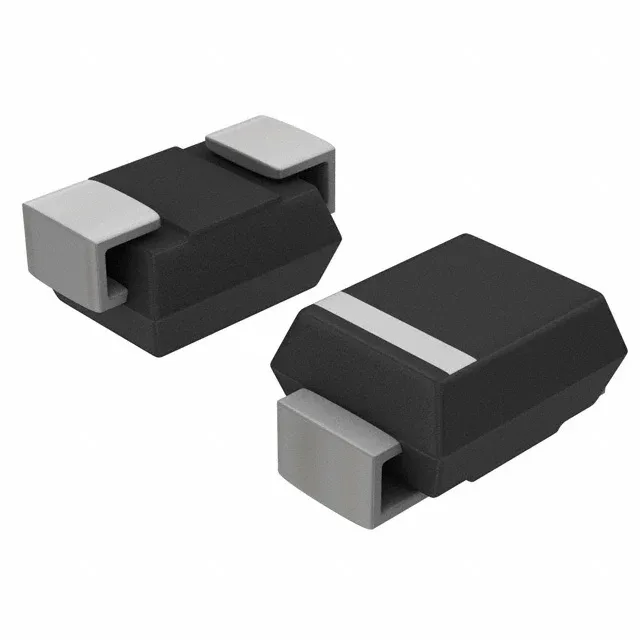
5 kW peak pulse in an SMC — what the clamping rating means
The 5.0SMDJ85CA-Q is a unidirectional Zener-based transient voltage suppressor — the bidirectional C-variant clamps both polarities of a surge event without needing two diodes in anti-series. Rated 5000 W peak pulse at the 10/1000 µs wave shape, it sits behind the primary power rail and bleeds a fault surge to ground before the downstream circuit sees more than 137 V at the peak 36.5 A current level. The 85 V standoff rating is the working voltage — the part idles off and only conducts when the line overshoots past the 94.4 V minimum breakdown threshold. In automotive 12 V supply domains, a 24 V load-dump profile or a motor coil disconnect puts far more than 85 V on the rail; the TVS clamps that transient and resets once the event clears. Junction temperature is rated to 150 °C with a 94.4 V minimum breakdown at -55 °C cold start — the part is characterised for cold-crank survival in engine-bay environments, not just room-temperature bench testing.
AEC-Q101 qualification — automotive-grade TVS sourcing context
The -Q suffix places this inside the Bourns 5.0SMDJ-Q series, which carries AEC-Q101 automotive qualification — the discrete-semiconductor stress-screen standard that covers temperature cycling, humidity bias, and surge life testing beyond what a commercial TVS sees. Automotive and telecom applications are the listed use cases; the AEC-Q101 badge is the signal that the wafer screening and lot traceability follow the automotive flow rather than the generic consumer flow.