8.5V standoff — what that means in-circuit
The 5.0SMDJ8.5A-Q: In a 5V rail automotive node, this gives plenty of headroom for normal operation while leaving the clamping headroom intact for ISO 7637-2 load-dump events. That 5.9V gap between standoff and clamping is the suppression margin — it is what buys the protected load time to respond.
5kW peak pulse — automotive-grade transient handling
The 347.3A peak pulse current at that pulse width confirms the diode die can survive the event without going into thermal runaway. If you are building an ECU or BCM, this is the minimum gate. For a powertrain or chassis module, a 150°C TJ at 85°C ambient gives roughly 65°C of margin before derating kicks in.
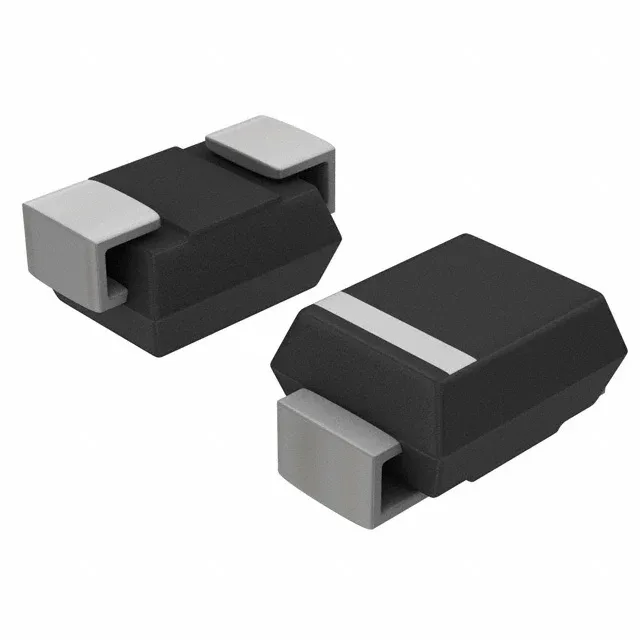
DO-214AB SMC — surface-mount automotive package
Solder joint integrity on the large cathode tab is the primary failure mode in thermal cycling — a proper drop-in replacement must match the pad footprint or the solder fillet geometry changes under vibration. Tape-and-reel packaging is standard for high-volume automotive assembly lines. If you are kitting for a contract manufacturer, confirm their feeder system accepts the specified reel diameter — some lines require cut-tape for MELF-style placements.