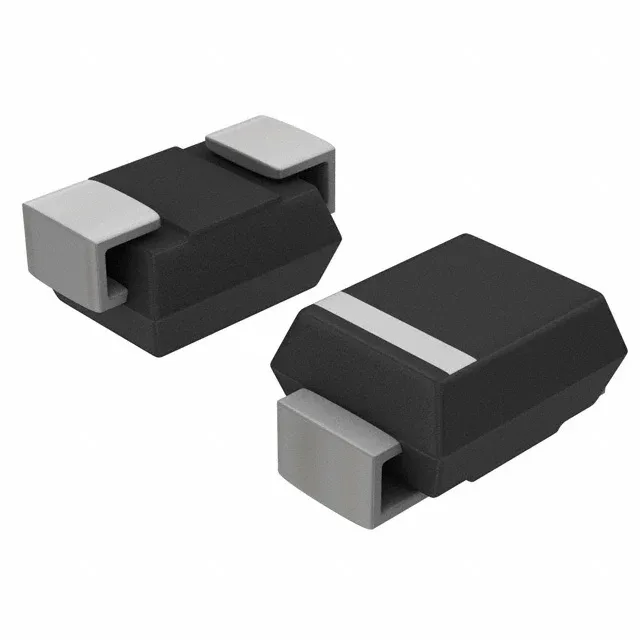
What the clamping window means for the protection circuit
The 5.0SMDJ6.0CA-Q: The standoff voltage of 6 V defines what the TVS sees as normal — the device is reverse-biased below this and draws only leakage current. For a 12 V automotive rail this gives a 4.3 V let-through headroom above the 6 V standoff, which is tight but workable — the clamping level must stay below the absolute-max rating of whatever IC sits behind it, so on sensitive telecom SerDes rails a Bourns part with a lower standoff or tighter clamping tolerance may be warranted.
Automotive temperature grade and where it goes
This temperature band covers both the cold end of a parked vehicle in winter and the engine-bay hotspot, so the part is deployable without derating in body-controller and powertrain modules. The telecom application context (outdoor cabinet in direct sun, -40°C cold soak) sits comfortably within the same window. For a 5 kW peak pulse the board pad area under the tab matters: under-size pads force the junction temperature higher on successive transients, shortening the TVS lifespan even though the absolute maximum is 150°C.