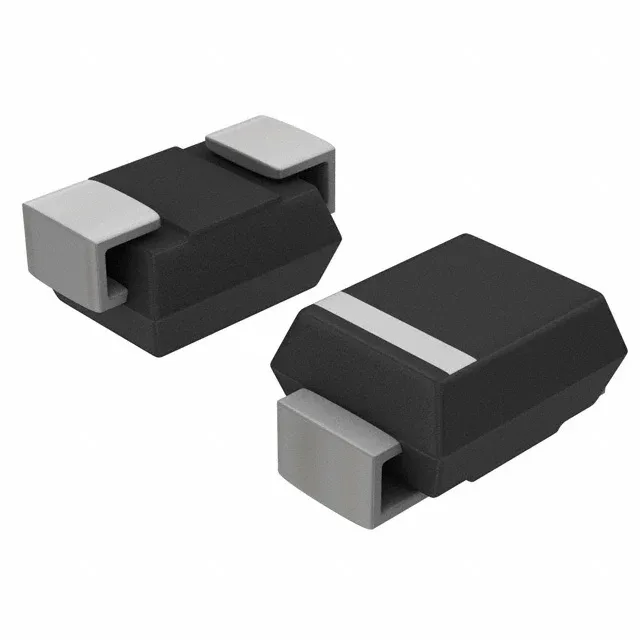
Bourns 5.0SMDJ58CA-QH — what it is and what it protects
It clamps voltage spikes on a protected rail by conducting the surge current away from downstream circuitry. The standoff voltage is 58 V typ, meaning the diode sits reverse-biased on a 58 V rail without conduction — the protection window opens above the 64.4 V breakdown minimum and clamps at 93.6 V max under the 53.5 A peak pulse (10/1000 µs waveform).
Protection window and the 5kW peak pulse rating
5 kW peak pulse power in a SMC package is the 10/1000 µs rating — the standard automotive surge waveform. This is not the same as an 8/20 µs lightning rating, which produces higher peak currents for a given energy. Confirm which surge standard your system specification requires before committing the BOM line. A downstream semiconductor with a lower abs-max rating than 93.6 V needs additional headroom or a tighter-clamping part.
AEC-Q101 temperature grade and automotive fit
A 150°C TJ on a part with 20°C thermal resistance to ambient leaves limited margin in a sealed engine-bay enclosure on a 125°C ambient day. The -55°C lower bound covers cold-start and downhole / outside-instrumentation deployments where the board sees sub-zero temperatures before the enclosure warms. This part is not a consumer-grade TVS clipped to 0–70°C; the full automotive temp band removes a common screening failure mode in outdoor telecom enclosures.
Surface-mount integration and tape-and-reel packaging
Surface-mount DO-214AB (SMC) is the standard foot for this power class — the lead frame die-attach area under the cathode tab is the thermal path to the PCB pad. Check the land-pattern recommendation: insufficient solder coverage at the tab reduces the effective thermal resistance and raises the operating junction temperature at rated surge current. Single bidirectional channel — this part has one polarity of protection, not a dual-polarity stack. Verify your rail polarity: a reverse-biased standoff on the negative half-cycle must not exceed the reverse voltage rating in the application. There is no internal anti-series configuration; the bidirectional rating comes from the Zener avalanche symmetry.