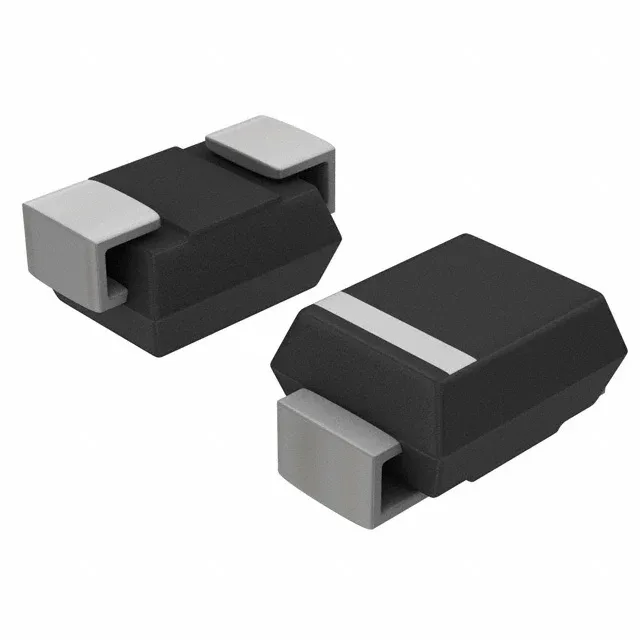
What this part is and why it exists
The 5.0SMDJ36CA-Q: Its 36V reverse standoff sits just above the 12V rail, so it sits idle during normal operation and clamps transients (load dump, inductive kick, switching spikes) to 58.1V before the downstream IC sees damage. The 86.1A peak pulse current rating tells you it survives the first-hit surge without going into thermal runaway — critical in automotive ECU input protection where the clamping voltage, not the standoff voltage, determines whether the downstream MOSFET gate oxide survives.
36V standoff and the 12V automotive rail
The 36V typ reverse standoff voltage sits comfortably above the 14V charging voltage on a 12V automotive rail — the diode sees less than its breakdown during normal operation. Budget your clamp-to-IC-absolute-maximum gap accordingly: a 5.5V safety margin (58.1V clamping vs 52.4V abs-max on a typical 5V rail) is tight but workable with series resistance in the signal path.
AEC-Q101 qualification and temperature grade
If your board runs the diode at full pulse duty, derate the 150°C Tj limit using the thermal impedance curve in the Bourns datasheet to confirm you stay within the 5kW peak rating on your actual pulse width and duty cycle.
SMC footprint and assembly notes
Tape-and-reel packaging suits high-volume pick-and-place lines; cut-tape is available for low-NRE prototyping runs.