What the clamping spec means for the protection circuit
With a 17V reverse standoff and 18.9V minimum breakdown, the 5.0SMDJ17CA-Q stays invisible to the circuit until a transient pushes the line above 18.9V — then it clamps at 27.6V max and shunts 181A peak pulse through the SCA suffix channel. That 27.6V ceiling is what the downstream semiconductor must survive; the 17V standoff sets the normal operating window with margin above the 12V automotive rail.
5 kW peak pulse — sizing for the automotive load-dump pulse
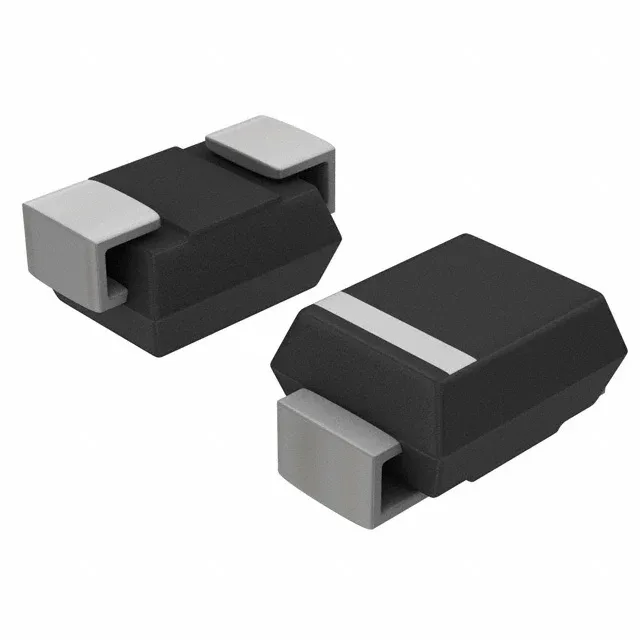
The 5000W rating is the 10/1000µs waveform peak — that is the load-dump pulse shape defined in ISO 7637-2 and the test pulse classes automotive OEMs run. A 181A peak pulse current at the clamping voltage confirms the device can absorb and route that surge energy to ground without the clamping voltage rising above the 27.6V abs-max at the protected node. The SMC (DO-214AB) package with its copper tab directly die-attached handles the thermal rise from that energy dump — junction temperature is rated to 150°C.
AEC-Q101 qualification and automotive temperature margin
Bourns flags this part in the Automotive, AEC-Q101, 5.0SMDJ-Q series — the AEC-Q101 discipline covers temperature cycling, HTRB stress, surge life, and humidity robustness that a generic industrial TVS does not. The CA suffix confirms bidirectional polarity — it protects against both positive transients on the line and reverse-polarity events without requiring a separate diode.
Sourcing posture
Surface-mount tape-and-reel packaging aligns with standard automotive BOM reel quantities.