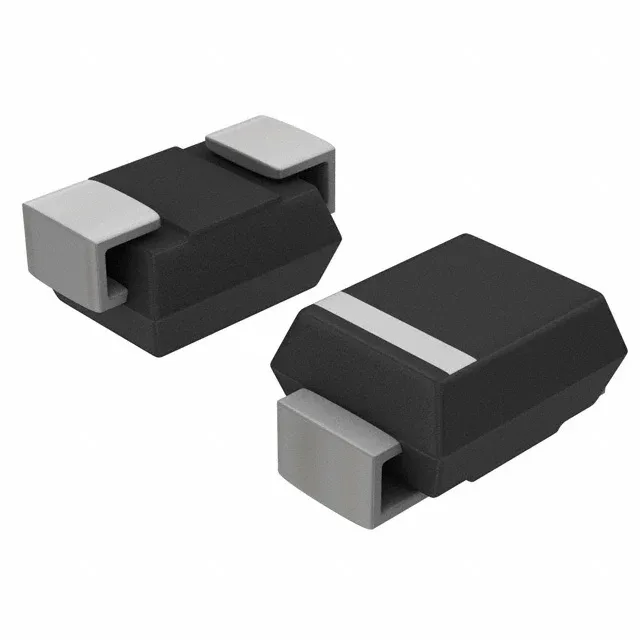
What 130 V standoff and 209 V clamping mean for a 150 V rail
The 5.0SMDJ130A-Q: When the transient fires, the clamping voltage (209 V max) is what the protected IC sees — the 5 kW peak pulse rating tells you the device survives a single-event surge without going short, which is the failure mode that cascades into a downstream system fault.
AEC-Q101 grade — why it changes what you put on the BOM
The 5.0SMDJ-Q series is AEC-Q101 qualified, meaning Bourns screens this part to the automotive stress-dataset — temperature cycling, humidity bias, and surge life are characterised to a statistical confidence level that a commercial-grade TVS is not. For an automotive ECU or a telecom power rail feeding outdoor equipment, that qualification is the difference between a BOM that passes IATF 16949 audit and one that does not.
DO-214AB SMC package — what the PCB layout engineer needs to know
The DO-214AB (SMC) is a two-terminal Gullwing package — orientation is cathode-anode only (confirms unidirectional), and the cathode band marking must face the protected line. No polarization confusion beyond that, but the thermal pad under the body is the primary heat path: the landing pad geometry and solder joint volume directly govern the thermal impedance from junction to board.
Active lifecycle — sourcing posture for this order code
Bourns lists the 5.0SMDJ130A-Q as Active — no official end-of-life notice, no stated successor.