Transient protection for automotive and telecom lines
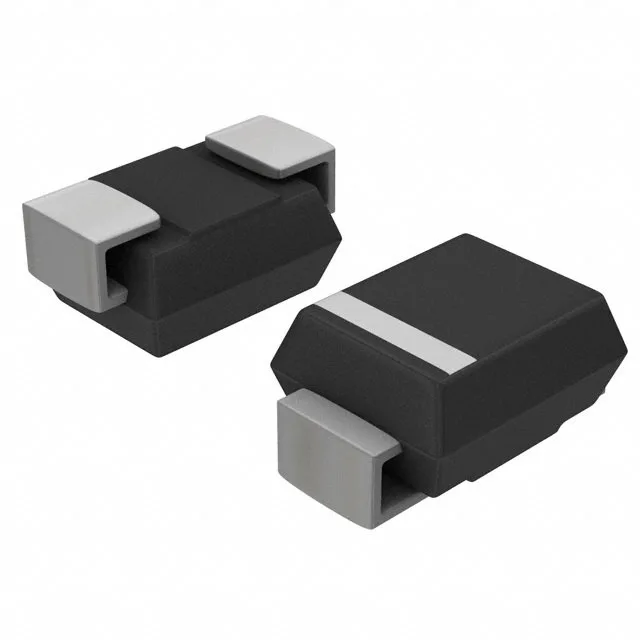
The 1.5SMC15CA-Q: Its 12.8V reverse standoff voltage means it stays transparent on a 12V nominal rail and only conducts when the surge exceeds the 14.3V breakdown threshold. The single bidirectional channel protects both signal polarities in one DO-214AB (SMC) package, saving board space compared to back-to-back unidirectional diodes.
What the 1500W rating means for your BOM
For shorter pulses (e.g. 8/20µs from ESD or lightning), the device can absorb significantly higher peak current because the energy per pulse is lower. The 71.7A peak pulse current at the clamping voltage of 21.2V gives the real energy-handling limit for a 12V system. Because this is a Zener TVS (not a varistor or polymer device), the clamping voltage is sharp and repeatable — the breakdown voltage is 14.3V min, so a 12.8V rail sees less than 1.5V of headroom before the diode starts conducting. This tight tolerance is critical for protecting sensitive 12V automotive ECUs, telematics, and sensor modules from load-dump and inductive-kick transients. The DO-214AB (SMC) package handles the 1500W dissipation with a standard reflow profile. No power-line protection means this part is intended for signal and low-power supply lines, not AC mains or high-current DC buses. For a 12V battery line, pair it with a series resistor or fuse to limit the fault current below the TVS's surge rating.