Clamp voltage and breakdown — the two numbers that decide fit
The 1.5SMBJ60A: When a transient hits, the part breaks down at a minimum of 66.7V and clamps the surge to 96.8V maximum at the rated 15.5A peak pulse current. The margin between the working rail and the breakdown threshold is the design headroom; if the rail sits at 56V nominal, the 4V gap is tight and the TVS may see leakage at temperature extremes. For shorter pulses (8/20µs, common in ESD or lightning), the peak power capability is higher; for longer pulses the derating curve in the datasheet governs the safe operating area.
Automotive-grade screening — what AEC-Q101 means for the BOM
The -55°C to 150°C junction temperature range covers the full automotive under-hood and chassis-mounted envelope — an engine-control unit or transmission controller that sees 125°C ambient still has 25°C of junction margin before the silicon reaches its absolute maximum. The Automotive grade designation is not a separate certification — it is the same AEC-Q101 screening applied to the production lot. For a buyer sourcing this part into a non-automotive BOM (industrial PSU, base-station power, battery charger), the automotive screening is a reliability bonus that costs no extra board space.
Package and footprint — DO-214AA SMB
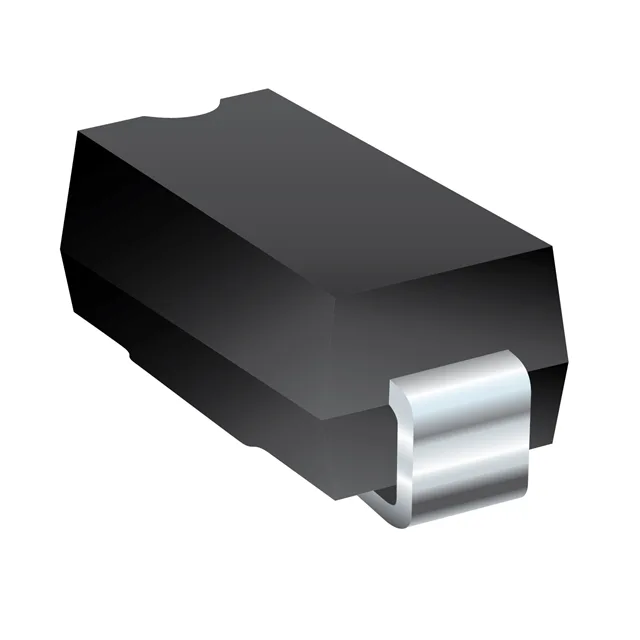
The DO-214AA (SMB) package is the standard surface-mount footprint for 1.5kW TVS diodes — the same pad layout as the smaller SMA (DO-214AC) parts but with a larger body to dissipate the higher pulse energy. The unidirectional construction means the cathode band marks the ground side; reverse the polarity and the part clamps the negative transient. For AC rails or bidirectional protection, two unidirectional parts back-to-back or a single bidirectional TVS is needed. The reel quantity is set by the Bourns standard pack for the SMB package; confirm the reel count with your assembler before committing the BOM line.