Active lifecycle and what it means for your BOM
The 1.5SMBJ54CA-H: AEC-Q101 qualification confirms the part has passed automotive-grade stress tests including temperature cycling, high-temperature reverse bias, and ESD robustness — it is not a commercial-grade part running on automotive paperwork.
Voltage rail protection — the three numbers that matter
The 54 V reverse standoff voltage is the maximum continuous DC voltage the TVS can sit across without conducting leakage — your rail must stay at or below this level under normal operation. Breakdown occurs at a minimum of 60 V, meaning the device starts clamping between 60 V and roughly 66 V (typical tolerance). The clamping voltage peaks at 87.1 V when the full 17.3 A peak pulse current flows — this is the voltage the protected circuit must survive without latch-up or oxide rupture. Bidirectional means both polarities clamp symmetrically — one part protects a signal line against positive and negative transients, saving a second diode in series.
1500 W surge rating — what 10/1000 µs means on the bench
A shorter pulse (e.g. 8/20 µs) allows higher peak current; a longer pulse derates the power. The 17.3 A figure is the current at that specific 10/1000 µs condition. Power derating above 25°C follows the Bourns datasheet curve; at 125°C ambient the effective pulse power drops to roughly 60% of the 1500 W rating.
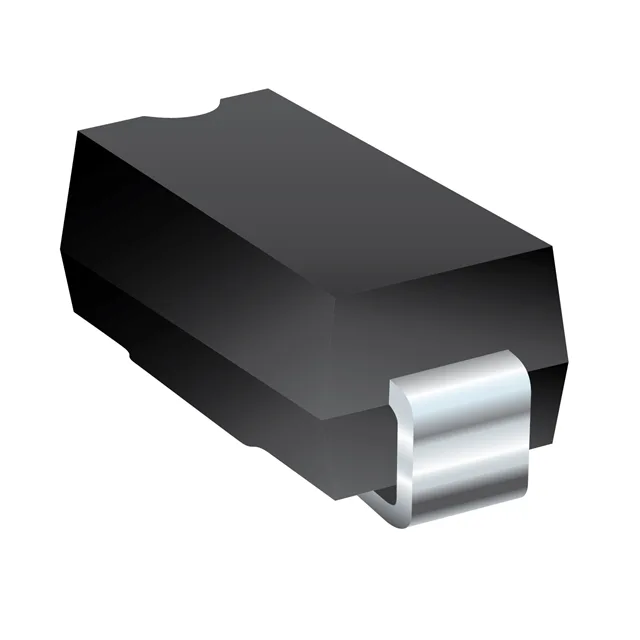
Housed in a DO-214AA (SMB) package — the industry-standard footprint for 1500 W TVS diodes in this voltage range. Surface-mount reflow profile per JEDEC J-STD-020; the package body is rated for MSL 1 (no moisture sensitivity bake required before reflow).